


Dalai Lama
As a prominent representative of the Gelug tradition, which dominated Central Tibet, the Dalai Lama's religious authority transcended sectarian lines, embodying Buddhist traditions and principles independent of any particular school.
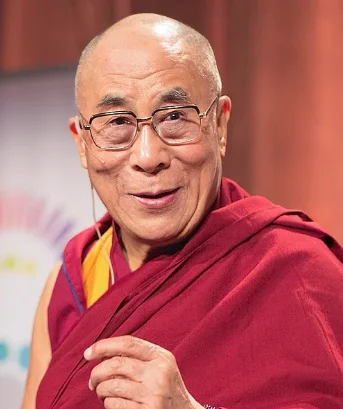
Spiritual & Political Leader (Tibetan Buddhism)
| Field | Detail |
|---|---|
| Title | Dalai Lama |
| Current Incarnation | 14th Dalai Lama, Tenzin Gyatso (born 1935) |
| Religious School | Gelug school of Tibetan Buddhism |
| Role | Spiritual Leader of Tibet, Former Political Leader (Head of Ganden Phodrang government) |
| Key Doctrines | Reincarnation (Tulku system), Avalokiteśvara Bodhisattva Manifestation, Priest–Patron Relationships |
| Historical Establishment | First Dalai Lama: Gendun Drup (1391–1474), Title formally given to 3rd Dalai Lama, Sonam Gyatso (1543–1588) |
| Political Highlights | 5th Dalai Lama unified Tibet (1642), 13th Dalai Lama declared independence (1912), 14th Dalai Lama fled Tibet (1959) |
| Major Awards | Nobel Peace Prize (1989) |
| Legacy Themes | #Compassion, #Nonviolence, #SpiritualLeadership, #TibetanIdentity, #InterfaithDialogue |
The Dalai Lama is the spiritual leader of the Gelug school of Tibetan Buddhism and historically served as the political leader of Tibet. The institution represents both spiritual authority and national symbolism within Tibetan identity.
Origins of the Title#
The title Dalai Lama was first bestowed in 1578 by Altan Khan upon Sonam Gyatso, the 3rd Dalai Lama. The first two were later recognized posthumously.
The term combines the Mongolic word dalai (“ocean”) and the Tibetan bla-ma (“guru” or “master”). In Tibetan, he is also known as Rgyal-ba Rin-po-che (“Precious Conqueror”).
Historical Role#
Political Leadership#
From 1642 to 1951, the Dalai Lama headed Tibet’s government, known as the Ganden Phodrang. Under the Qing dynasty, Tibet functioned as a protectorate with varying autonomy.
After the Qing collapse in 1912, the 13th Dalai Lama declared Tibet independent, though this was not internationally recognized.
In 1951, the 14th Dalai Lama ratified the Seventeen Point Agreement with China, later rejecting it in 1959 following the Tibetan uprising.
Priest–Patron Relationship#
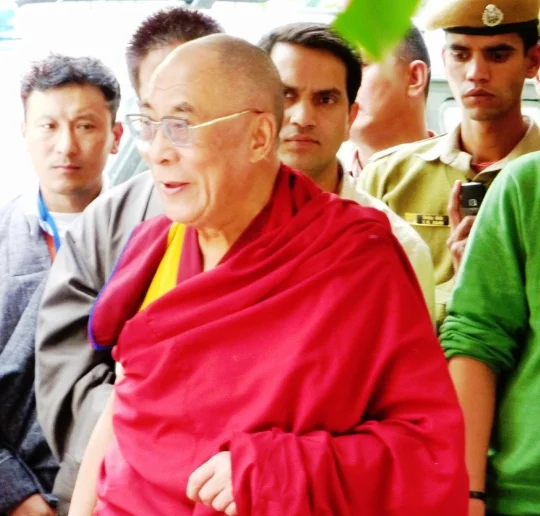
The mchod-yon (“priest and patron”) relationship described alliances between Tibetan lamas and Mongol or Manchu rulers. In 1793, the Qing formalized oversight through the “29-Article Ordinance for the More Effective Governing of Tibet.”
Reincarnation Doctrine#
According to Tibetan Buddhist belief, each Dalai Lama is a reincarnation (tulku) who consciously chooses rebirth. The 14th Dalai Lama has publicly opposed Chinese state involvement in the recognition of his successor.
Avalokiteśvara Connection#
Since the 11th century, Tibetans have regarded the Dalai Lamas as manifestations of Avalokiteśvara, the bodhisattva of compassion. This lineage is symbolically linked to early Tibetan kings such as Songtsen Gampo.
Establishment of the Lineage#
1st Dalai Lama: Gendun Drup (1391–1474)#
Disciple of Tsongkhapa, founder of the Gelug school. Founded Tashilhunpo Monastery.
3rd Dalai Lama: Sonam Gyatso (1543–1588)#
Converted Altan Khan and Mongolia to Buddhism and formally received the title Dalai Lama.
5th Dalai Lama: Ngawang Lobsang Gyatso (1617–1682)#
Unified Tibet in 1642 with support from Güshi Khan. Established political rule and moved the government to the Potala Palace in Lhasa.
Later Dalai Lamas#
13th Dalai Lama: Thubten Gyatso (1876–1933)#
Declared Tibet’s independence in 1912 and introduced modernization reforms.
14th Dalai Lama: Tenzin Gyatso (1935–present)#
Escaped Tibet in 1959 and established a government-in-exile in Dharamshala, India. Awarded the Nobel Peace Prize in 1989 for nonviolent advocacy.
Legacy#
The Dalai Lama remains a global symbol of compassion, interfaith dialogue, and nonviolence. The institution continues to shape Tibetan religious and cultural identity.
References#
- Encyclopaedia Britannica. Dalai Lama. Link ↩
- Central Tibetan Administration. History of the Dalai Lamas. Link ↩
- Britannica. Sonam Gyatso. Link ↩
- Oxford Dictionary of World Religions. Dalai Lama. ↩
- Britannica. Ganden Phodrang. Link ↩
- Britannica. Qing Dynasty and Tibet. Link ↩
- Britannica. 13th Dalai Lama. Link ↩
- Britannica. 14th Dalai Lama. Link ↩
- Encyclopedia of Religion. Priest–Patron System. ↩
- Britannica. Qing Regulations of Tibet. ↩
- Britannica. Tulku Tradition. Link ↩
- BBC News. Dalai Lama succession debate. Link ↩
- Britannica. Avalokiteśvara. Link ↩
- Britannica. Songtsen Gampo. Link ↩
- Britannica. Tsongkhapa. Link ↩
- Britannica. Güshi Khan. Link ↩
- The Nobel Prize. 1989 Peace Prize. Link ↩
- United Nations. Dalai Lama and Nonviolence. ↩







Community involvement is essential for successful conservation. Local people, who often depend on forests for their livelihoods, play a significant role in managing these resources sustainably. Education and awareness programs help foster a sense of ownership, ensuring that forests are protected and preserved for future generations.
Engaging local communities is vital for successful conservation efforts. Since many depend on forests for their livelihoods, they are key players in sustainable resource management. Raising awareness and providing education empower these communities, fostering a shared commitment to protect forests for the future.
This was an intriguing article! I appreciate how it captures the essence of modern intellectuals and their diverse thoughts. The analysis was insightful and made me reflect on how these thinkers influence our current world. It’s not often that we get such a deep dive into the minds of today’s intellectuals.
Thank you for your thoughtful feedback! I’m glad to hear that the article resonated with you and sparked reflection. Exploring the ideas of modern intellectuals is always fascinating, especially when considering their impact on our world today.
Thank you for your kind words! I’m glad the article resonated with you. It’s always fascinating to explore the thoughts of modern intellectuals and their influence on our world. I appreciate you taking the time to reflect on these ideas. If there are specific topics or thinkers you’d like to see more of, feel free to share!
I’m so glad you found the article intriguing! The diverse perspectives of modern intellectuals truly shape how we see the world, and it’s rewarding to explore their impact in depth. It’s always inspiring to hear how others interpret these complex ideas. If you have any specific thinkers or topics you\’d like to dive deeper into, I’d love to hear your suggestions!
Comments are closed.