


Desmond Tutu
He served as the first Black African to hold the office as Bishop of Johannesburg from 1985 to 1986 and as Archbishop of Cape Town from 1986 to 1996.
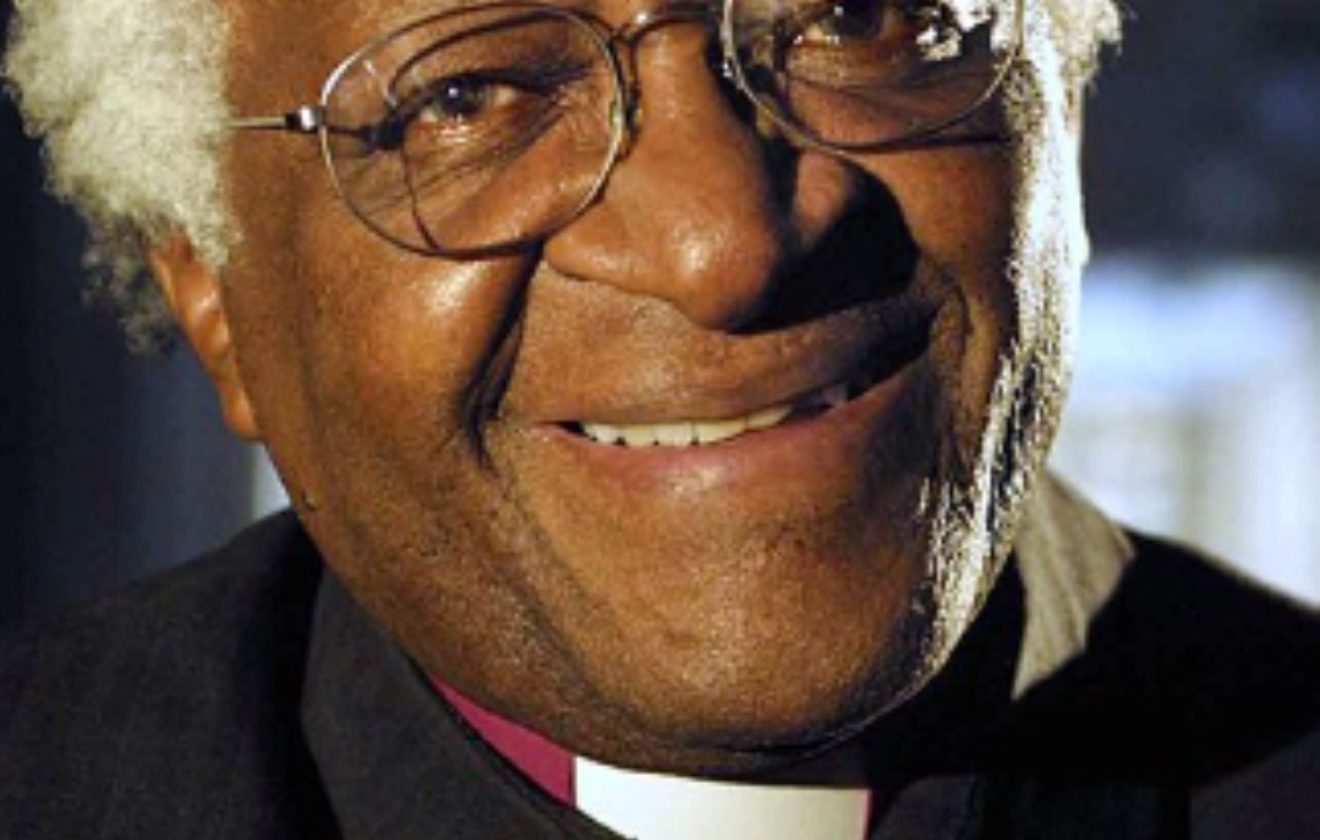
Religious Leader & Human Rights Advocate (1931–2021)
| Field | Detail |
|---|---|
| Born | 7 October 1931 |
| Died | 26 December 2021 |
| Nationality | South African |
| Education | Pretoria Bantu Normal College; King’s College London (BA, MA in Theology) |
| Title Portfolio | Archbishop of Cape Town; Bishop of Johannesburg; Anti-Apartheid Activist; Chair of the Truth and Reconciliation Commission; Human Rights Advocate |
| Key Status | #AntiApartheid, #Ubuntu, #TruthAndReconciliation, #HumanRights, #Theology |
Desmond Mpilo Tutu (7 October 1931 – 26 December 2021) was a preeminent South African Anglican bishop and theologian, globally revered for his tireless work as an anti-apartheid and human rights activist. He broke significant racial barriers by becoming the first Black African to serve as the Bishop of Johannesburg (1985–1986) and subsequently as the Archbishop of Cape Town (1986–1996). His theological approach was unique, seeking to harmonize Black theology with traditional African theology.
Throughout his rise to prominence in the 1970s, Tutu became a polarizing yet admired figure, popular among South Africa’s black majority and internationally celebrated for his activism, eventually earning the Nobel Peace Prize in 1984. Beyond his clerical duties, he was a prolific author, compiling numerous books of his speeches and sermons that documented the struggle for a non-racial democracy.
Early Life and Education (1931–1955)#
Born in Klerksdorp, Transvaal, Tutu was of mixed Xhosa and Motswana heritage. His father, Zachariah Zelilo Tutu, was a primary school principal, and his mother, Allen Dorothea Mavoertsek Mathlare, worked as a cook. Despite a childhood marked by poverty and illness—including polio which atrophied his right hand and a bout of tuberculosis that hospitalized him for 18 months—he excelled academically.
Teacher Training and Marriage#
Tutu initially secured admission to study medicine, but his family could not afford the fees, leading him to pursue teaching through a government scholarship at Pretoria Bantu Normal College. It was during a college debate that he first met Nelson Mandela, though they would not meet again for nearly four decades. In 1955, he married Nomalizo Leah Shenxane, and they began a life together that would eventually include several children.
Entry into the Clergy and Academic Growth#
The introduction of the Bantu Education Act in 1953, which institutionalised racial segregation in schools, compelled Tutu to leave the teaching profession in protest. Supported by his mentor, priest Trevor Huddleston, he turned to the Anglican Church and was ordained as a priest in 1960.
Studies in the United Kingdom#
Seeking advanced theological training, Tutu moved to London in 1962 to study at King’s College London. Living in Britain offered his family a liberating reprieve from the pass laws and systemic racism of South Africa. He earned both a Bachelor’s and a Master’s degree, focusing his graduate research on Islam in West Africa. His time abroad was transformative, helping him shed feelings of racial inferiority and jettison bitterness toward white people.
Anti-Apartheid Activism and SACC Leadership#
Upon returning to South Africa, Tutu taught at various institutions before becoming the Theological Education Fund’s director for Africa in 1972. In 1975, he was appointed the first Black Dean of St Mary’s Cathedral in Johannesburg. From 1978 to 1985, he served as the general-secretary of the South African Council of Churches (SACC), transforming it into a leading human rights advocacy body.
The Struggle for Justice#
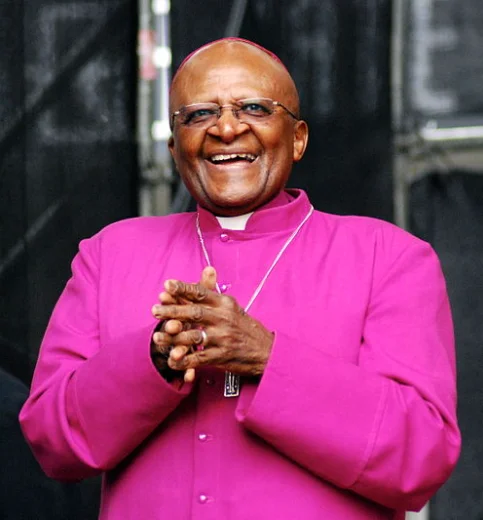
As a vocal opponent of white minority rule, Tutu used his platform to advocate for non-violent protest and foreign economic sanctions against the South African government. He condemned apartheid as “evil” and “unchristian” during his testimony to the Eloff Commission.
His activism led to repeated government harassment, including the confiscation of his passport, which only served to heighten his international profile as an icon of the freedom struggle.
Archbishop of Cape Town and the Truth Commission#
In 1986, Tutu was elected Archbishop of Cape Town, the highest position in the Anglican hierarchy of southern Africa. In this role, he emphasized consensus-building, oversaw the ordination of female priests, and advocated for gay rights, comparing the exclusion of women and LGBTQ+ individuals to the injustice of apartheid.
The Truth and Reconciliation Commission (TRC)#
After the fall of apartheid and the election of Nelson Mandela as president in 1994, Tutu was appointed to chair the Truth and Reconciliation Commission. The commission sought to investigate human rights abuses from both sides of the conflict through a model of restorative justice rooted in the African concept of Ubuntu. Tutu famously wept during public hearings while listening to the harrowing testimonies of victims.
Later Life and Global Advocacy (1999–2021)#
Retiring as archbishop in 1996, he was granted the title Archbishop Emeritus. He continued to be a moral conscience for the world, speaking out against the Iraq War, criticizing corruption within the ANC government under Jacob Zuma, and campaigning for HIV/AIDS awareness.
The Elders and Final Years#
In 2007, he became the inaugural chair of The Elders, a group of global leaders working for world peace and human rights. Even after his formal retirement from public life in 2010, he continued to support causes such as climate justice and assisted dying. Desmond Tutu died from cancer on 26 December 2021 at the age of 90. He was honored with a state funeral, interred in a simple pine coffin per his request to avoid ostentation.
References
- Allen, J. (2006). Rabble-Rouser for Peace: The Authorized Biography of Desmond Tutu. https://books.google.com/books?id=Y3VQAAAAMAAJ
- Anglican Church of Southern Africa. (1986). Ecclesiastical Records: First Black African Appointments for Johannesburg and Cape Town. https://www.anglicanchurchsa.org.za/
- Battle, M. (1997). Reconciliation: The Ubuntu Theology of Desmond Tutu. https://books.google.com/books?id=b4hYAAAAMAAJ
- Du Boulay, S. (1988). Tutu: Voice of the Voiceless. https://books.google.com/books?id=5RZgAAAAMAAJ
- Gish, S. D. (2004). Desmond Tutu: A Biography. https://books.google.com/books?id=qk4BAAAAMAAJ
- Huddleston, T. (1956). Naught for Your Comfort. https://books.google.com/books?id=KX0MAQAAMAAJ
- King’s College London. (1966). Alumni Records: Theological Studies of Desmond Mpilo Tutu. https://www.kcl.ac.uk/aboutkings/history/alumni
- National Party of South Africa. (1953). Bantu Education Act. https://www.sahistory.org.za/article/bantu-education-act-1953
-
South African Council of Churches. (1978). Minutes of the General Secretary: Tenure of Desmond Tutu.
Home
- The Nobel Prize. (1984). The Nobel Peace Prize 1984 – Desmond Tutu. https://www.nobelprize.org/prizes/peace/1984/tutu/facts/
- United Nations Special Committee Against Apartheid. (1981). Address by Bishop Desmond Tutu. https://www.un.org/en/antiapartheid/
- Truth and Reconciliation Commission. (1998). Final Report. https://www.justice.gov.za/trc/report/
- Tutu, D. (1999). No Future Without Forgiveness. https://books.google.com/books?id=VbQbAQAAIAAJ
- Nelson Mandela Foundation. (2004). Annual Nelson Mandela Lecture. https://www.nelsonmandela.org/
- The Elders. (2007). Founding Mission. https://theelders.org/
- Peres Center for Peace. (1996). Israeli–Palestinian Conflict Dialogue. https://www.peres-center.org/
- Desmond Tutu HIV Foundation. (2003). The Tutu Tester Program. https://desmondtutuhivfoundation.org.za/
- Tutu, D. (1982). Crying in the Wilderness. https://books.google.com/books?id=4KkMAQAAMAAJ
- Tutu, D. (1994). The Rainbow People of God. https://books.google.com/books?id=9k0FAQAAIAAJ
- Office of the Presidency of South Africa. (2010). Retirement Announcement. https://www.thepresidency.gov.za/
- The Guardian. (2014). Op-ed: Why I Support Legalised Assisted Dying. https://www.theguardian.com/commentisfree/2014/oct/06/desmond-tutu-assisted-dying
- Office of President Cyril Ramaphosa. (2021). National Announcement: Death of Archbishop Desmond Tutu. https://www.gov.za/
- Templeton Foundation. (2013). Templeton Prize – Desmond Tutu. https://www.templetonprize.org/laureate-subpage/desmond-tutu/
- BBC Radio 3. (2017). International Women’s Day – The Power of Tutu’s Public Speaking. https://www.bbc.co.uk/programmes/
- World Economic Forum. (2009). Davos Addresses. https://www.weforum.org/








Community involvement is essential for successful conservation. Local people, who often depend on forests for their livelihoods, play a significant role in managing these resources sustainably. Education and awareness programs help foster a sense of ownership, ensuring that forests are protected and preserved for future generations.
Engaging local communities is vital for successful conservation efforts. Since many depend on forests for their livelihoods, they are key players in sustainable resource management. Raising awareness and providing education empower these communities, fostering a shared commitment to protect forests for the future.
This was an intriguing article! I appreciate how it captures the essence of modern intellectuals and their diverse thoughts. The analysis was insightful and made me reflect on how these thinkers influence our current world. It’s not often that we get such a deep dive into the minds of today’s intellectuals.
Thank you for your thoughtful feedback! I’m glad to hear that the article resonated with you and sparked reflection. Exploring the ideas of modern intellectuals is always fascinating, especially when considering their impact on our world today.
Thank you for your kind words! I’m glad the article resonated with you. It’s always fascinating to explore the thoughts of modern intellectuals and their influence on our world. I appreciate you taking the time to reflect on these ideas. If there are specific topics or thinkers you’d like to see more of, feel free to share!
I’m so glad you found the article intriguing! The diverse perspectives of modern intellectuals truly shape how we see the world, and it’s rewarding to explore their impact in depth. It’s always inspiring to hear how others interpret these complex ideas. If you have any specific thinkers or topics you\’d like to dive deeper into, I’d love to hear your suggestions!
Comments are closed.