


Wangari Maathai
Political activist who established the Green Belt Movement, a non-governmental group dedicated to women's rights, environmental preservation, and tree planting.

Environmentalist & Nobel Peace Laureate (1940–2011)
| Field | Detail |
|---|---|
| Born | April 1, 1940 (Nyeri, Kenya) |
| Died | September 25, 2011 (Age 71) |
| Nationality | Kenyan |
| Education | Mount St. Scholastica College (B.S., Biological Sciences); University of Pittsburgh (M.S.); University of Nairobi (Ph.D., Veterinary Anatomy) |
| Title | Founder, Green Belt Movement; Environmentalist; Political Activist; Assistant Minister for Environment, Kenya |
| Key Status | #NobelPeaceLaureate, #EnvironmentalLeader, #WomenEmpowerment, #SustainabilityAdvocate |
Wangari Muta Maathai (1 April 1940 – 25 September 2011) was a Kenyan environmentalist, political activist, and Nobel laureate who founded the Green Belt Movement, an environmental organization focused on tree planting, conservation, and women’s empowerment. In 2004, she became the first African woman to receive the Nobel Peace Prize for her contribution to sustainable development, democracy, and peace. Maathai is widely recognized for linking environmental conservation with human rights and social justice, particularly in rural Kenya.
Early Life and Education
Wangari Maathai was born in Nyeri, in the central highlands of Kenya, then part of British colonial rule. She grew up in a rural farming community where she developed an early appreciation for nature and the environment. In 1960, she was among a select group of East African students awarded scholarships through the “Kennedy Airlift” program, enabling her to study in the United States. She earned a bachelor’s degree in biological sciences from Mount St. Scholastica College (now Benedictine College) and later obtained a master’s degree from the University of Pittsburgh. After returning to Kenya, she completed a Ph.D. in veterinary anatomy at the University of Nairobi, becoming the first woman in East and Central Africa to earn a doctorate.
Academic and Professional Career
Maathai joined the faculty of the University of Nairobi, where she later became chair of the Department of Veterinary Anatomy. During her academic career, she advocated for equal rights for women in the workplace and challenged institutional discrimination. Her exposure to rural women’s struggles—particularly deforestation, soil erosion, and lack of firewood—shaped her environmental activism.
The Green Belt Movement
In 1977, Maathai founded the Green Belt Movement under the auspices of the National Council of Women of Kenya. The initiative encouraged women to plant trees to combat deforestation, restore ecosystems, and generate income. The movement grew into a nationwide campaign, resulting in the planting of millions of trees across Kenya. It also promoted civic education, environmental awareness, and grassroots democracy. Maathai’s activism often brought her into conflict with the Kenyan government, particularly during the presidency of Daniel arap Moi. She faced arrests, harassment, and physical assault for protesting land grabbing and environmental destruction.
Political Involvement
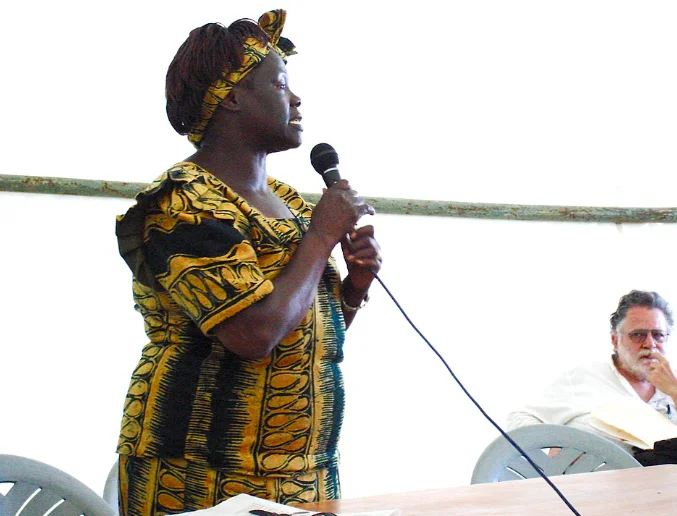
Maathai became increasingly involved in pro-democracy activism during the 1980s and 1990s. She campaigned for multiparty democracy and greater transparency in governance. In 2002, she was elected to the Kenyan Parliament and later appointed Assistant Minister for Environment, Natural Resources, and Wildlife. In government, she continued advocating for environmental protection and sustainable policies.
Nobel Peace Prize (2004)
In 2004, Wangari Maathai was awarded the Nobel Peace Prize for “her contribution to sustainable development, democracy and peace.” The Nobel Committee recognized her work in connecting environmental conservation with human rights and good governance. Her award marked a historic milestone, making her the first African woman to receive the honor.
Later Years and Death
In her later years, Maathai continued to promote environmental sustainability globally, speaking at international forums and supporting climate action initiatives. She passed away on 25 September 2011 after battling cancer. Tributes from around the world honored her as a pioneer of environmental justice and women’s empowerment.
Legacy
Wangari Maathai is remembered as a global symbol of environmental activism and grassroots leadership. The Green Belt Movement continues to operate across Africa and beyond. Her life demonstrated the interconnection between environmental protection, democratic governance, and peace. Numerous institutions, awards, and environmental initiatives have been named in her honor.
References
Ste








Community involvement is essential for successful conservation. Local people, who often depend on forests for their livelihoods, play a significant role in managing these resources sustainably. Education and awareness programs help foster a sense of ownership, ensuring that forests are protected and preserved for future generations.
Engaging local communities is vital for successful conservation efforts. Since many depend on forests for their livelihoods, they are key players in sustainable resource management. Raising awareness and providing education empower these communities, fostering a shared commitment to protect forests for the future.
This was an intriguing article! I appreciate how it captures the essence of modern intellectuals and their diverse thoughts. The analysis was insightful and made me reflect on how these thinkers influence our current world. It’s not often that we get such a deep dive into the minds of today’s intellectuals.
Thank you for your thoughtful feedback! I’m glad to hear that the article resonated with you and sparked reflection. Exploring the ideas of modern intellectuals is always fascinating, especially when considering their impact on our world today.
Thank you for your kind words! I’m glad the article resonated with you. It’s always fascinating to explore the thoughts of modern intellectuals and their influence on our world. I appreciate you taking the time to reflect on these ideas. If there are specific topics or thinkers you’d like to see more of, feel free to share!
I’m so glad you found the article intriguing! The diverse perspectives of modern intellectuals truly shape how we see the world, and it’s rewarding to explore their impact in depth. It’s always inspiring to hear how others interpret these complex ideas. If you have any specific thinkers or topics you\’d like to dive deeper into, I’d love to hear your suggestions!
Comments are closed.