


Foundational Mathematics and Spaceflight (1918–2020)
| Field | Detail |
|---|---|
| Born | August 26, 1918 (Died February 24, 2020, Age 101) |
| Nationality | American |
| Education | West Virginia State University (Mathematics & French, summa cum laude) |
| Current Net Worth | N/A |
| Title Portfolio | Mathematician; NASA Trajectory Analyst; Pioneer in Orbital Mechanics |
| Key Status | #HumanComputer, #NASAPathfinder, #HiddenFigures, #STEMIcon |
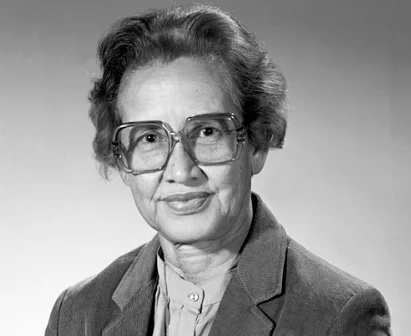
Creola Katherine Johnson (née Coleman; August 26, 1918 – February 24, 2020) was an American mathematician whose precise calculations of orbital mechanics were critical to the success of early United States crewed spaceflights. During her 33-year career at the National Advisory Committee for Aeronautics (NACA) and its successor, NASA, she became widely respected for her mastery of complex mathematical analysis and for helping transition spaceflight calculations from human computers to electronic systems.
Johnson played a central role in Project Mercury, the Apollo program, and early Space Shuttle development. In 2015, she was awarded the Presidential Medal of Freedom.
Early Life and Education#
Childhood and Family Background#
Katherine Johnson was born on August 26, 1918, in White Sulphur Springs, West Virginia. She was the youngest of four children born to Joylette Roberta Lowe, a schoolteacher, and Joshua McKinley Coleman, a farmer and handyman.
From an early age, Johnson demonstrated extraordinary mathematical ability. Because her county did not provide public high school education for African-American students beyond eighth grade, her family relocated part-time so she could attend high school in Institute, West Virginia.
College Education#
At just 14 years old, Johnson enrolled at West Virginia State College (now West Virginia State University). She completed every mathematics course offered by the college. Her mentors included mathematician W. W. Schieffelin Claytor, who created advanced courses specifically for her.
In 1937, at age 18, she graduated summa cum laude with degrees in mathematics and French.
Graduate Studies and Early Teaching Career#
In 1939, Johnson became one of the first African-American students admitted to West Virginia University’s graduate school following the Supreme Court ruling in Missouri ex rel. Gaines v. Canada. She was the only woman among the three African-American students admitted that year.
She later left graduate studies to focus on family life and worked as a public school teacher.
Career at NACA and NASA#
West Area Computers#
In 1953, Johnson joined NACA’s West Area Computing unit at Langley Memorial Aeronautical Laboratory in Virginia. She worked in a segregated unit known as the “Colored Computers,” where African-American women performed complex manual calculations for aeronautical research.
Despite racial and gender segregation policies in Virginia at the time, Johnson quickly gained recognition for her expertise in analytic geometry.
Transition to NASA#
In 1958, NACA became NASA. Johnson moved to the Spacecraft Controls Branch, where she contributed to trajectory analysis and mission planning for human spaceflight.
Contributions to Project Mercury#
Johnson calculated the trajectory for Alan Shepard’s 1961 Freedom 7 mission, making him the first American in space. She also determined the launch window for the mission.
When NASA began using electronic computers to calculate John Glenn’s orbital flight, Glenn specifically requested that Johnson verify the computer’s results before launch. Her verification ensured the accuracy of the orbital calculations for Friendship 7.
Apollo Program Contributions#
Johnson later contributed to trajectory planning and navigation analysis for the Apollo program, which aimed to land humans on the Moon and return them safely to Earth.
Apollo 11#
Her calculations helped support mission trajectory verification for Apollo 11, the historic 1969 mission that landed the first humans on the Moon. The mission carried astronauts Neil Armstrong, Buzz Aldrin, and Michael Collins.
Johnson’s expertise in orbital mechanics contributed to ensuring the accuracy of translunar trajectories and Earth-return calculations—key elements in the success of the first Moon landing.
Apollo 13#
During the Apollo 13 crisis in 1970, an oxygen tank explosion forced NASA to abort the planned Moon landing. Johnson contributed to the development of backup navigation charts that helped guide the spacecraft safely back to Earth.
Her earlier trajectory work proved essential in calculating emergency return paths and reentry coordinates, supporting the safe return of astronauts Jim Lovell, Jack Swigert, and Fred Haise.
Space Shuttle and Later NASA Work#
After the success of the Apollo missions, Katherine Johnson continued working on trajectory analysis and mission planning for the Space Shuttle program, NASA’s reusable spacecraft initiative designed to support long-duration orbital missions.
Space Shuttle Development#
Johnson’s mathematical expertise contributed to early shuttle flight trajectory studies and orbital rendezvous planning. These calculations helped engineers understand spacecraft launch windows, reentry paths, and safe landing conditions.
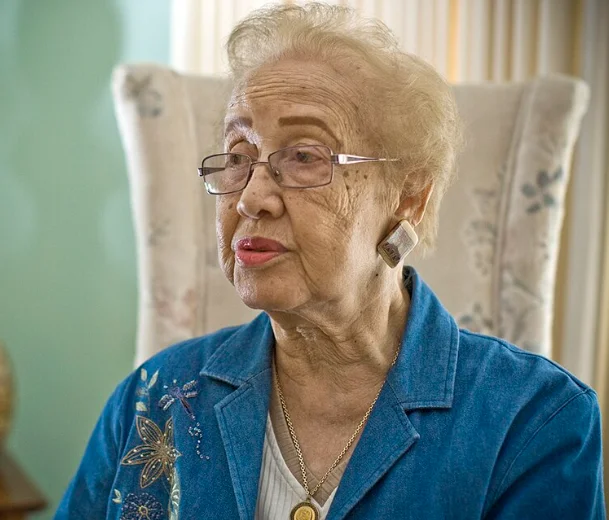
She worked with teams analyzing data for shuttle missions and helped refine models used in navigation and guidance systems. Her work demonstrated how human analytical methods could complement electronic computers during complex mission planning.
Earth Resources Satellite Work#
Johnson also contributed to trajectory calculations for Earth-observing satellite missions, including early planning for NASA’s Earth Resources Technology Satellite (later called Landsat).
These satellites helped scientists study agriculture, weather, environmental change, and natural resources from space. Johnson’s calculations supported mission timing, orbital accuracy, and long-term tracking.
Mars Mission Planning#
During her later NASA career, Johnson worked on preliminary calculations for future human spaceflight missions, including conceptual trajectory studies for a possible human mission to Mars.
Although these missions were not carried out during her lifetime, her analytical work contributed to NASA’s long-term exploration planning and demonstrated the importance of accurate orbital mathematics in deep-space travel.
Retirement#
After more than three decades of groundbreaking work in aeronautics and astronautics, Katherine Johnson retired from NASA in 1986 after 33 years of service.
Even after retirement, she remained active in education outreach and public speaking, inspiring students—especially young women and minorities—to pursue careers in science, technology, engineering, and mathematics (STEM).
Personal Life#
Katherine Johnson married James Francis Goble in 1939, and the couple had three daughters together.
After Goble’s death in 1956, she later married James A. Johnson, a U.S. Army officer, in 1959. Their marriage lasted more than six decades until his death in 2019.
Johnson was a devoted member of Carver Memorial Presbyterian Church, where she sang in the choir and taught Sunday school.
She lived in Newport News, Virginia, for most of her career and remained active in community and educational outreach even after retirement.
Johnson died peacefully on February 24, 2020, at the age of 101.
Legacy and Honors#
National Recognition#
In 2015, U.S. President Barack Obama awarded Johnson the Presidential Medal of Freedom, the highest civilian honor in the United States.
In 2019, she received the Congressional Gold Medal, recognizing her groundbreaking contributions to American spaceflight.
In 2021, Johnson was inducted into the National Women’s Hall of Fame.
NASA Honors#
In 2016, NASA dedicated the Katherine G. Johnson Computational Research Facility at Langley Research Center in her honor.
In 2019, NASA renamed its Independent Verification and Validation Facility in West Virginia as the Katherine Johnson IV&V Facility.
Hidden Figures and Cultural Impact#
Johnson gained worldwide recognition through the book Hidden Figures by Margot Lee Shetterly, which told the story of African-American women mathematicians at NASA.
She was portrayed by actress Taraji P. Henson in the 2016 film adaptation.
The film brought international attention to Johnson’s contributions and highlighted the role of Black women in the early space program.
Johnson’s story inspired new generations of students to pursue careers in science, technology, engineering, and mathematics (STEM), especially women and minorities.
Awards and Honors #
- Presidential Medal of Freedom (2015)
- Silver Snoopy Award from NASA astronauts (2016)
- NASA Group Achievement Award
- Congressional Gold Medal (2019)
- National Women’s Hall of Fame Induction (2021)
- National Aviation Hall of Fame Induction (2024)
References#
- NASA Biography of Katherine Johnson – https://www.nasa.gov/content/katherine-johnson-biography ↩
- Britannica: Katherine Johnson – https://www.britannica.com/biography/Katherine-Johnson ↩
- NASA History Office – https://history.nasa.gov ↩
- White House Medal of Freedom – https://obamawhitehouse.archives.gov ↩
- Biography.com – https://www.biography.com/scientists/katherine-johnson ↩
- Hidden Figures Book – https://www.harpercollins.com/products/hidden-figures-margot-lee-shetterly ↩
- NASA Education – https://www.nasa.gov/education ↩
- West Virginia State University Archives – https://www.wvstateu.edu ↩
- Claytor Biography – https://mathshistory.st-andrews.ac.uk ↩
- Smithsonian Biography – https://airandspace.si.edu ↩
- West Virginia University History – https://www.wvu.edu ↩
- NASA Hidden Figures Profile – https://www.nasa.gov/feature/hidden-figures ↩
- National Women’s History Museum – https://www.womenshistory.org ↩
- Langley Research Center History – https://www.nasa.gov/langley ↩
- Hidden Figures Documentary – https://www.pbs.org ↩
- NASA Mathematics Contributions – https://www.nasa.gov/stem ↩
- NASA Formation History – https://history.nasa.gov/SP-4201/ch1-2.htm ↩
- Mercury Mission Planning – https://www.nasa.gov/mission_pages/mercury ↩
- Freedom 7 Mission – https://www.nasa.gov/mission_pages/mercury/missions/freedom7.html ↩
- Mercury Launch Windows – https://history.nasa.gov ↩
- John Glenn Interview – https://www.nasa.gov/feature/john-glenn ↩
- Friendship 7 Flight – https://www.nasa.gov/mission_pages/mercury/missions/friendship7.html ↩
- NASA Apollo Program Overview – https://www.nasa.gov/mission_pages/apollo/ ↩
- NASA Apollo 11 Mission Page – https://www.nasa.gov/mission_pages/apollo/missions/apollo11.html ↩
- NASA History Office: Apollo Trajectories – https://history.nasa.gov/apollo.html ↩
- NASA Apollo 13 Mission Page – https://www.nasa.gov/mission_pages/apollo/missions/apollo13.html ↩
- Apollo 13 Return and Navigation Analysis – https://history.nasa.gov/SP-4029/Apollo_13a_Summary.htm ↩
- NASA Space Shuttle Overview – https://www.nasa.gov/humans-in-space/space-shuttle/ ↩
- NASA Space Shuttle Guidance and Navigation History – https://history.nasa.gov/sts.html ↩
- NASA Human Computers and Shuttle Calculations – https://www.nasa.gov/langley/human-computers/ ↩
- NASA Landsat Mission Overview – https://www.nasa.gov/mission_pages/landsat/main/index.html ↩
- NASA Earth Observation Satellites History – https://earthobservatory.nasa.gov/features/Landsat ↩
- NASA Moon to Mars Exploration Plan – https://www.nasa.gov/humans-in-space/moon-to-mars/ ↩
- NASA Deep Space Trajectory Planning – https://www.nasa.gov/directorates/heo/scan/engineering/technology/ ↩
- NASA Biography: Katherine Johnson – https://www.nasa.gov/people/katherine-johnson/ ↩
- NASA STEM Outreach and Katherine Johnson Legacy – https://www.nasa.gov/stem/ ↩
- NASA Biography – Katherine Johnson – https://www.nasa.gov/people/katherine-johnson/ ↩
- Smithsonian Magazine – Katherine Johnson Profile – https://www.smithsonianmag.com/smithsonian-institution/katherine-johnson-profile-180962601/ ↩
- Carver Memorial Presbyterian Church Official Site – https://carvermemorialpc.org/ ↩
- NASA Langley History – Human Computers – https://www.nasa.gov/langley/human-computers/ ↩
- NASA Statement on Katherine Johnson’s Passing – https://www.nasa.gov/press-release/nasa-mourns-passing-of-katherine-johnson/ ↩
- White House Presidential Medal of Freedom Recipients – https://obamawhitehouse.archives.gov/campaign/medal-of-freedom ↩
- U.S. Congress Congressional Gold Medal Act – https://www.congress.gov/bill/116th-congress/senate-bill/2170 ↩
- National Women’s Hall of Fame – Katherine Johnson – https://www.womenofthehall.org/inductee/katherine-johnson/ ↩
- NASA Johnson Computational Research Facility – https://www.nasa.gov/langley/Johnson-Computational-Research-Facility ↩
- NASA Katherine Johnson IV&V Facility – https://www.nasa.gov/ivv/ ↩
- HarperCollins Hidden Figures Book Page – https://www.harpercollins.com/products/hidden-figures-margot-lee-shetterly ↩
- IMDb Hidden Figures Cast – https://www.imdb.com/title/tt4846340/ ↩
- NASA Hidden Figures Feature – https://www.nasa.gov/feature/langley/hidden-figures ↩
- NASA STEM Outreach Programs – https://www.nasa.gov/stem/ ↩
- White House Medal of Freedom Citation – https://obamawhitehouse.archives.gov/the-press-office/2015/11/24/president-obama-names-recipients-presidential-medal-freedom ↩
- NASA Silver Snoopy Award History – https://history.nasa.gov/awards.html ↩
- NASA Group Achievement Award Info – https://www.nasa.gov/offices/ooe/agency-awards ↩
- Congressional Gold Medal Ceremony – https://www.congress.gov/116/plaws/publ68/PLAW-116publ68.pdf ↩
- National Women’s Hall of Fame 2021 Inductees – https://www.womenofthehall.org/2021-inductees/ ↩
- National Aviation Hall of Fame – Katherine Johnson – https://nationalaviation.org/enshrinement/katherine-johnson/ ↩









Community involvement is essential for successful conservation. Local people, who often depend on forests for their livelihoods, play a significant role in managing these resources sustainably. Education and awareness programs help foster a sense of ownership, ensuring that forests are protected and preserved for future generations.
Engaging local communities is vital for successful conservation efforts. Since many depend on forests for their livelihoods, they are key players in sustainable resource management. Raising awareness and providing education empower these communities, fostering a shared commitment to protect forests for the future.
This was an intriguing article! I appreciate how it captures the essence of modern intellectuals and their diverse thoughts. The analysis was insightful and made me reflect on how these thinkers influence our current world. It’s not often that we get such a deep dive into the minds of today’s intellectuals.
Thank you for your thoughtful feedback! I’m glad to hear that the article resonated with you and sparked reflection. Exploring the ideas of modern intellectuals is always fascinating, especially when considering their impact on our world today.
Thank you for your kind words! I’m glad the article resonated with you. It’s always fascinating to explore the thoughts of modern intellectuals and their influence on our world. I appreciate you taking the time to reflect on these ideas. If there are specific topics or thinkers you’d like to see more of, feel free to share!
I’m so glad you found the article intriguing! The diverse perspectives of modern intellectuals truly shape how we see the world, and it’s rewarding to explore their impact in depth. It’s always inspiring to hear how others interpret these complex ideas. If you have any specific thinkers or topics you\’d like to dive deeper into, I’d love to hear your suggestions!
Comments are closed.