


Martin Luther King Jr.
By using peaceful resistance and civil disobedience against Jim Crow laws and other types of legalized discrimination, which primarily targeted African Americans, he expanded civil rights for people of color in the United States.
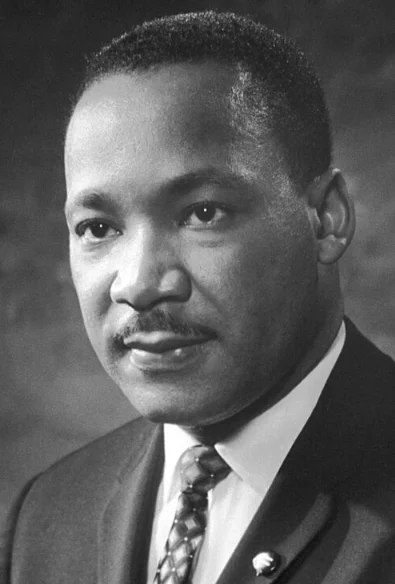
Civil Rights Leader & Minister (1929–1968)
| Field | Detail |
|---|---|
| Born | January 15, 1929 (Atlanta, Georgia, USA) |
| Died | April 4, 1968 (Age 39) |
| Nationality | American |
| Education | Morehouse College (B.A., Sociology); Crozer Theological Seminary (B.Div.); Boston University (Ph.D., Systematic Theology) |
| Title | Baptist Minister; Civil Rights Leader; President, Southern Christian Leadership Conference (SCLC) |
| Key Status | #CivilRightsIcon, #NonviolenceLeader, #NobelPeaceLaureate, #EqualityAdvocate |
Martin Luther King Jr. (born Michael King Jr.; 15 January 1929 – 4 April 1968) was an American Baptist minister and civil rights leader who became the most prominent spokesperson and leader in the civil rights movement from 1955 until his assassination in 1968. He advocated nonviolent resistance and civil disobedience to challenge racial segregation and discrimination in the United States. King is best known for his role in advancing civil rights through peaceful protest, most notably during the Montgomery Bus Boycott and the 1963 March on Washington, where he delivered his famous “I Have a Dream” speech. In 1964, he received the Nobel Peace Prize for combating racial inequality through nonviolent resistance.
Early Life and Education
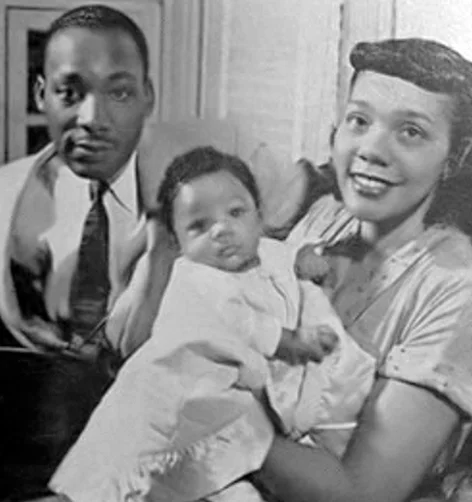
Martin Luther King Jr. was born in Atlanta, Georgia, to Martin Luther King Sr. and Alberta Williams King. Originally named Michael King Jr., his father later changed both their names to honor the Protestant reformer Martin Luther. He attended segregated public schools in Atlanta and entered Morehouse College at the age of 15. After earning a degree in sociology, he studied at Crozer Theological Seminary and later received a doctorate in systematic theology from Boston University.
Montgomery Bus Boycott (1955–1956)
King rose to national prominence during the Montgomery Bus Boycott, sparked by the arrest of Rosa Parks in December 1955. The boycott lasted 381 days and resulted in a Supreme Court ruling that declared segregation on public buses unconstitutional. During this period, King emerged as a powerful advocate of nonviolent protest, inspired by the teachings of Mahatma Gandhi.
Southern Christian Leadership Conference (SCLC)
In 1957, King helped found and became the first president of the Southern Christian Leadership Conference (SCLC). The organization coordinated nonviolent protests and campaigns across the South to challenge segregation and voter suppression. King led major campaigns in Birmingham, Alabama, where peaceful demonstrators were met with violent resistance from authorities. The televised brutality helped shift public opinion in favor of civil rights reform.
March on Washington and “I Have a Dream” (1963)
On 28 August 1963, King helped organize the March on Washington for Jobs and Freedom, attended by more than 250,000 people. During the rally, he delivered his iconic “I Have a Dream” speech, calling for racial equality and envisioning a nation where individuals would be judged by the content of their character rather than the color of their skin. The event contributed to the passage of the Civil Rights Act of 1964, which outlawed discrimination based on race, color, religion, sex, or national origin.
Selma Campaign and Voting Rights (1965)
King played a leading role in the Selma voting rights movement, which included the Selma to Montgomery marches. Violent attacks on peaceful marchers drew national outrage and led to the passage of the Voting Rights Act of 1965.
Later Years and Assassination
In his later years, King expanded his activism to include opposition to poverty and the Vietnam War. He launched the Poor People’s Campaign to address economic injustice. On 4 April 1968, King was assassinated in Memphis, Tennessee. His death sparked widespread unrest across the United States.
Legacy
Martin Luther King Jr. is remembered as one of the most influential leaders in American history. His commitment to nonviolence and equality reshaped U.S. law and society. He was posthumously awarded the Presidential Medal of Freedom and the Congressional Gold Medal. In 1986, Martin Luther King Jr. Day became a federal holiday in the United States, observed annually on the third Monday in January.
References





Community involvement is essential for successful conservation. Local people, who often depend on forests for their livelihoods, play a significant role in managing these resources sustainably. Education and awareness programs help foster a sense of ownership, ensuring that forests are protected and preserved for future generations.
Engaging local communities is vital for successful conservation efforts. Since many depend on forests for their livelihoods, they are key players in sustainable resource management. Raising awareness and providing education empower these communities, fostering a shared commitment to protect forests for the future.
This was an intriguing article! I appreciate how it captures the essence of modern intellectuals and their diverse thoughts. The analysis was insightful and made me reflect on how these thinkers influence our current world. It’s not often that we get such a deep dive into the minds of today’s intellectuals.
Thank you for your thoughtful feedback! I’m glad to hear that the article resonated with you and sparked reflection. Exploring the ideas of modern intellectuals is always fascinating, especially when considering their impact on our world today.
Thank you for your kind words! I’m glad the article resonated with you. It’s always fascinating to explore the thoughts of modern intellectuals and their influence on our world. I appreciate you taking the time to reflect on these ideas. If there are specific topics or thinkers you’d like to see more of, feel free to share!
I’m so glad you found the article intriguing! The diverse perspectives of modern intellectuals truly shape how we see the world, and it’s rewarding to explore their impact in depth. It’s always inspiring to hear how others interpret these complex ideas. If you have any specific thinkers or topics you\’d like to dive deeper into, I’d love to hear your suggestions!