


Ratan Tata
From 1991 until 2012, he was the chairman of Tata Group and Tata Sons. From October 2016 to February 2017, he was the interim chairman.

Industrialist & Philanthropist (India)
| Field | Detail |
|---|---|
| Born | December 28, 1937 (Age 86 at death, 2024) |
| Nationality | Indian |
| Education | Cornell University (B.Arch., 1962); Advanced Management Program, Harvard Business School (1975) |
| Current Net Worth | Estimated $1–2 Billion (largely tied to Tata Trusts and group holdings) |
| Title / Portfolio | Chairman Emeritus, Tata Group; Former Chairman, Tata Sons; Philanthropist; Industrialist |
| Key Status | #Industrialist, #Philanthropist, #GlobalBusinessLeader, #SocialImpact |
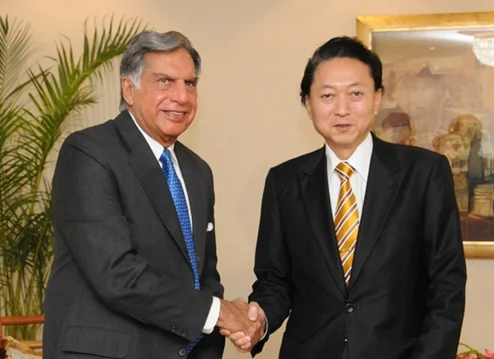
Ratan Naval Tata (28 December 1937 – 9 October 2024) was an Indian industrialist and philanthropist who served as chairman of the Tata Group and Tata Sons from 1991 to 2012, and briefly as interim chairman from October 2016 to February 2017. He was widely credited with transforming the Tata conglomerate into a global enterprise while expanding its philanthropic mission. He received the Padma Bhushan in 2000 and the Padma Vibhushan in 2008, two of India’s highest civilian honors.
Early Life and Education#
Ratan Tata was born in Mumbai into a Parsi family. He was the son of Naval Tata and Soonoo Tata, and was raised primarily by his grandmother Navajbai Tata after his parents separated. He studied at Campion School, Cathedral and John Connon School, Bishop Cotton School, and Riverdale Country School in New York. He graduated from Cornell University in 1962 with a degree in architecture and later attended the Advanced Management Program at Harvard Business School in 1975.
Career#
Ratan Tata worked briefly at Jones & Emmons in Los Angeles before returning to India in 1962 to join Tata Steel on the shop floor. In 1991 he became chairman of Tata Sons, succeeding J. R. D. Tata, and introduced major organizational reforms and global expansion. Key acquisitions under his leadership included Tetley (2000), Corus Steel (2007), and Jaguar Land Rover (2008). He also launched the Tata Nano, promoted electric vehicles, and oversaw a dramatic increase in group revenue and profit.
Philanthropy#
Ratan Tata supported education, medicine, rural development, and disaster relief. Major donations were made to Cornell University, Harvard Business School, MIT, IIT Bombay, and IISc Bangalore. He helped establish the Tata Innovation Center at Cornell Tech and supported Alzheimer’s research. After the 2008 Mumbai attacks, he led the restoration of the Taj Mahal Palace Hotel.
Board Memberships#
He chaired Tata Trusts and served on the boards of Alcoa, Mondelez International, Cornell University, Harvard Business School, and the Carnegie Endowment for International Peace. He was also a jury member for the Pritzker Architecture Prize.
Personal Life and Death#
Ratan Tata never married, though he said he came close several times. He died on 9 October 2024 at Breach Candy Hospital in Mumbai, aged 86, and was accorded a state funeral with military honors. His will reportedly included large bequests to family members, staff, charities, and provisions for his dog Tito.
Honours and Awards#
His major honors included the Padma Bhushan (2000), Padma Vibhushan (2008), Maharashtra Bhushan (2006), Assam Baibhav (2021), and international honors such as the Order of the British Empire, the Order of the Rising Sun (Japan), and the Legion of Honour (France).
Legacy#
Ratan Tata transformed the Tata Group into a global powerhouse while strengthening its philanthropic roots. He became known for combining business leadership with compassion, innovation, and humility, leaving a lasting impact on Indian industry and society.
References
- “Ratan Tata,” Wikipedia. https://en.wikipedia.org/wiki/Ratan_Tata
- Government of India Padma Awards Database. https://padmaawards.gov.in
- Tata Group Heritage. https://www.tata.com
- Cornell University Alumni Records. https://alumni.cornell.edu
- Tata Steel History. https://www.tatasteel.com
- Tata Sons Leadership Timeline. https://www.tata.com
- Tata Group Annual Reports. https://www.tata.com/investors
- Tata Trusts Philanthropy Reports. https://www.tatatrusts.org
- Taj Hotel Restoration Coverage. https://www.thehindu.com
- Pritzker Prize Jury Records. https://www.pritzkerprize.com
- BBC Obituary Reports. https://www.bbc.com/news
- Ratan Tata Will News. https://www.hindustantimes.com
- International Honors Listings. https://www.forbes.com
- Economic Analysis of Tata Legacy. https://www.economist.com







Community involvement is essential for successful conservation. Local people, who often depend on forests for their livelihoods, play a significant role in managing these resources sustainably. Education and awareness programs help foster a sense of ownership, ensuring that forests are protected and preserved for future generations.
Engaging local communities is vital for successful conservation efforts. Since many depend on forests for their livelihoods, they are key players in sustainable resource management. Raising awareness and providing education empower these communities, fostering a shared commitment to protect forests for the future.
This was an intriguing article! I appreciate how it captures the essence of modern intellectuals and their diverse thoughts. The analysis was insightful and made me reflect on how these thinkers influence our current world. It’s not often that we get such a deep dive into the minds of today’s intellectuals.
Thank you for your thoughtful feedback! I’m glad to hear that the article resonated with you and sparked reflection. Exploring the ideas of modern intellectuals is always fascinating, especially when considering their impact on our world today.
Thank you for your kind words! I’m glad the article resonated with you. It’s always fascinating to explore the thoughts of modern intellectuals and their influence on our world. I appreciate you taking the time to reflect on these ideas. If there are specific topics or thinkers you’d like to see more of, feel free to share!
I’m so glad you found the article intriguing! The diverse perspectives of modern intellectuals truly shape how we see the world, and it’s rewarding to explore their impact in depth. It’s always inspiring to hear how others interpret these complex ideas. If you have any specific thinkers or topics you\’d like to dive deeper into, I’d love to hear your suggestions!
Comments are closed.