


Marie Curie
By isolating radium and studying its nature and compounds, she was able to discover the elements polonium and radium, which earned her the 1911 Nobel Prize in Chemistry.
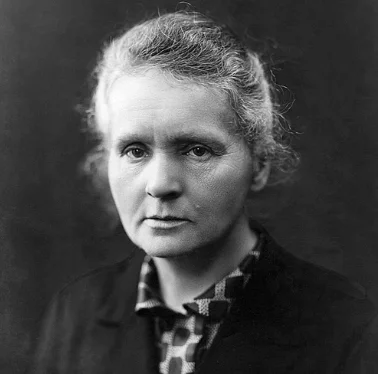
Scientific Discovery and Radioactivity Revolution (1890s–1934)
| Field | Detail |
|---|---|
| Born | November 7, 1867 (Died July 4, 1934, Age 66) |
| Nationality | Polish-born, Naturalised French |
| Education | University of Paris (Physics & Mathematics) |
| Fields | Physics; Chemistry; Radiochemistry |
| Major Discoveries | Polonium; Radium; Theory of Radioactivity |
| Nobel Prizes | Physics (1903); Chemistry (1911) |
| Key Collaborators | Pierre Curie; Henri Becquerel |
| Institutions Founded | Radium Institute (Paris & Warsaw) |
| Cause of Death | Aplastic anemia (radiation exposure) |
| Title Portfolio | Nobel Laureate; Physicist; Chemist; Research Pioneer |
| Key Status | #DoubleNobelLaureate, #RadioactivityPioneer, #WomenInScience, #ScientificLegend |
Maria Salomea Skłodowska Curie (Polish: [ˈmarja salɔˈmɛa skwɔˈdɔfska kiˈri]; née Skłodowska; 7 November 1867 – 4 July 1934), widely known as Marie Curie, was a Polish-born and naturalised-French physicist and chemist who conducted pioneering research on radioactivity, a term she coined. She was one of the most influential scientists of the modern era and remains a central figure in the development of nuclear physics and radiochemistry.
In 1903, she was awarded the Nobel Prize in Physics alongside her husband Pierre Curie and physicist Henri Becquerel for their investigations into radiation phenomena. In 1911, she received the Nobel Prize in Chemistry for the discovery of the elements polonium and radium and for successfully isolating radium in metallic form. She was the first woman to win a Nobel Prize, the first individual to win two Nobel Prizes, and the only person to win Nobel Prizes in two distinct scientific disciplines.
Curie became, in 1906, the first woman appointed professor at the University of Paris. Together with Pierre Curie, she established a scientific legacy that extended to subsequent generations; members of the Curie family would ultimately receive five Nobel Prizes. Her discoveries fundamentally transformed scientific understanding of atomic structure and provided the foundations for advances in cancer treatment and medical radiology.
Born in Warsaw in the Kingdom of Poland, then under Russian rule, Curie pursued her early education in secret institutions before relocating to Paris in 1891 to continue her studies at the University of Paris. Despite financial hardship and systemic discrimination against women in science, she completed advanced degrees in physics and mathematics and initiated groundbreaking experimental research.
Following Pierre Curie’s death in 1906, she assumed his academic position and continued her investigations into radioactive substances. She later founded the Radium Institute in Paris in 1920 and played a major role in establishing the Warsaw Radium Institute in 1932. During the First World War, she developed mobile radiography units that enabled battlefield surgeons to use X-ray technology near the front lines.
Marie Curie died in 1934 from aplastic anaemia, likely resulting from prolonged exposure to ionising radiation during her scientific and wartime work. In 1995, her remains were transferred to the Panthéon in Paris, making her the first woman interred there on her own merits. Her contributions to science and society have established her as one of the most celebrated and respected figures in scientific history.
Early years#
Marie Curie (born Maria Salomea Skłodowska) was born on 7 November 1867 in Warsaw, then part of the Russian Empire. She was the youngest of five children of Władysław Skłodowski, a mathematics and physics teacher, and Bronisława Boguska, headmistress of a respected girls’ school. Her parents emphasized education, patriotism, and intellectual curiosity during a period when Poland was under Russian rule.
Curie’s childhood was marked by hardship. Her sister Zofia died of typhus in 1876, and her mother died of tuberculosis two years later. These losses forced young Maria into emotional maturity early in life and strengthened her commitment to study.
She attended a Russian secondary school in Warsaw and graduated with a gold medal in 1883. Because women were barred from university education in Russian-controlled Poland, Curie joined the clandestine Flying University, an underground network that secretly taught Polish students science and humanities in their native language.
To support her sister Bronisława’s medical education in Paris, Curie worked as a governess while studying mathematics and physics independently at night. During this period she experienced a failed romance with Kazimierz Żorawski, which reinforced her determination to pursue scientific work rather than traditional expectations of marriage.
In 1891, at age 24, she moved to Paris and enrolled at the University of Paris (Sorbonne). Living in poverty but studying intensely, she earned a degree in physics in 1893 and another in mathematics in 1894. These academic achievements laid the foundation for her groundbreaking research into radioactivity.
Marriage and Research with Pierre Curie#
In 1894, a French physicist known for his work on crystallography, magnetism, and piezoelectricity. Their shared passion for science quickly developed into a deep intellectual partnership, and they married on 26 July 1895 in a modest civil ceremony in Sceaux, France.
Rather than taking a traditional honeymoon, the couple toured the French countryside on bicycles and soon began collaborative research. Marie was searching for a topic for her doctoral thesis and became interested in the mysterious rays discovered by Wilhelm Röntgen and Henri Becquerel. Becquerel had observed that uranium salts emitted penetrating radiation without external energy sources.
Using sensitive electrometers designed by Pierre and his brother Jacques Curie, Marie began measuring radiation from various uranium compounds and discovered that the radiation depended only on the amount of uranium present, not on its chemical state. She concluded that the radiation came from the atom itself, a revolutionary idea at the time.
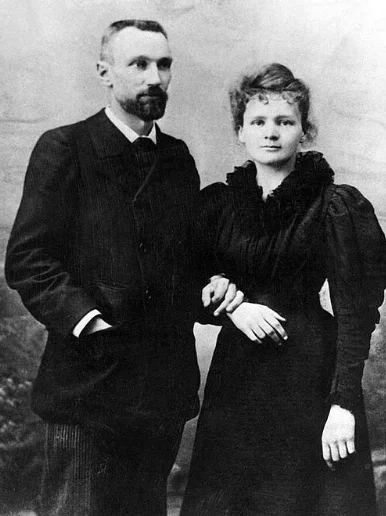
In 1898, while studying pitchblende ore, the Curies discovered two new elements. They named the first polonium after Marie’s homeland Poland, and the second radium for its intense radioactivity. Extracting radium required processing tons of ore in a primitive laboratory, where they stirred boiling cauldrons of chemicals for years under difficult conditions.
Their work introduced the term “radioactivity,” coined by Marie Curie to describe the spontaneous emission of energy from atoms. The discoveries transformed physics and chemistry, proving that atoms were not indivisible as previously believed.
In 1903, Marie and Pierre Curie shared the Nobel Prize in Physics with Henri Becquerel for their research into radiation phenomena. Initially, the Nobel Committee planned to award only Pierre and Becquerel, but Pierre insisted Marie’s contributions be recognized. Marie Curie thus became the first woman to receive a Nobel Prize.
Their collaboration ended tragically in 1906 when Pierre Curie died in a street accident in Paris after slipping beneath a horse-drawn carriage. Devastated, Marie nevertheless continued their work, taking Pierre’s teaching position at the Sorbonne and becoming its first female professor.
Nobel Prizes and Scientific Achievements#
Following the tragic death of her husband in 1906, continued her research with remarkable determination. She succeeded Pierre Curie as professor of physics at the University of Paris, becoming the first woman to teach there. At the same time, she continued refining methods to isolate radium and investigate the chemical properties of radioactive elements.
In 1903, Marie Curie had already shared the Nobel Prize in Physics with Pierre Curie and Henri Becquerel for their research on radiation phenomena. However, her greatest individual recognition came in 1911, when she was awarded the Nobel Prize in Chemistry for discovering the elements polonium and radium, isolating radium, and studying the nature and compounds of radioactive substances. She thus became the first person ever to win two Nobel Prizes in different scientific fields.
Despite these achievements, Curie faced significant opposition and prejudice in the male-dominated scientific community. In 1911, she was denied election to the French Academy of Sciences by a narrow margin. The same year, she was involved in a public scandal concerning her friendship with physicist Paul Langevin, which subjected her to intense press harassment and xenophobic criticism. Nevertheless, she traveled to Stockholm to accept her second Nobel Prize, insisting that her personal life was irrelevant to her scientific work.
Curie founded the Radium Institute (now the Curie Institute) in Paris in 1914, dedicated to research in radioactivity and medical applications of radiation. She also helped establish a similar institute in Warsaw in honor of her homeland. These institutions became world leaders in nuclear physics and cancer research.
During World War I, Curie developed mobile X-ray units, known as “Little Curies,” to assist battlefield surgeons in locating bullets and fractures. She trained hundreds of technicians, including her daughter Irène Curie, to operate the equipment and personally traveled to the front lines. Her work saved countless lives and advanced the use of radiology in medicine.
Curie’s scientific achievements transformed physics and chemistry. Her work demonstrated that atoms were divisible and that radioactive decay released enormous energy. These discoveries laid the groundwork for nuclear physics, atomic energy, and modern cancer therapy.
In recognition of her contributions, Curie received numerous honors, including honorary degrees, scientific medals, and membership in academies worldwide. Her daughter Irène Joliot-Curie later shared the 1935 Nobel Prize in Chemistry with her husband Frédéric Joliot-Curie, making the Curie family one of the most distinguished scientific dynasties in history.
World War I Contributions#
When World War I began in 1914, recognized that X-ray technology could save countless lives by allowing doctors to locate bullets and shrapnel inside wounded soldiers. At the time, radiology was still in its infancy, and few hospitals near the front possessed adequate equipment or trained technicians.
Curie persuaded the French government to support her plan to equip ambulances with portable X-ray machines. She helped design and install about 20 mobile radiography units, which became known as “Little Curies.” These vehicles contained X-ray apparatus, darkroom equipment, and generators powered by automobile engines.
In addition to the mobile units, Curie established more than 200 permanent radiology installations in field hospitals throughout France and Belgium. She personally drove vehicles to the front lines, assisting surgeons and performing radiographic examinations under dangerous wartime conditions.
Recognizing the shortage of trained operators, Curie founded radiology training courses for women volunteers. She taught anatomy, physics, and X-ray techniques to hundreds of nurses and technicians, many of whom had no prior scientific background. Her daughter joined her efforts as a teenage assistant, working in military hospitals and learning radiography firsthand.
Curie also worked to provide hospitals with radium needles for sterilizing infected tissue and treating tumors. She carried tubes of radium with her, sometimes at personal risk, to ensure that radiological treatments were available for wounded soldiers.
It is estimated that over one million soldiers were examined using Curie’s X-ray equipment during the war. Her innovations dramatically improved battlefield medicine by enabling surgeons to operate more accurately and quickly.
Despite her enormous contributions, Curie refused military medals or financial rewards, believing her duty was simply to help those in need. However, her wartime service earned her international admiration and recognition for applying scientific knowledge to humanitarian causes.
Curie’s work during World War I helped establish modern radiology as an essential medical discipline. Her mobile X-ray units became the model for future medical imaging systems used in emergencies and disaster relief worldwide.
Later Life and Death
After World War I, returned to her research at the Radium Institute in Paris, which had become a leading center for the study of radioactivity and cancer treatment. She oversaw scientific programs, trained young researchers, and continued investigations into radioactive elements and their medical applications.
In 1921, Curie traveled to the United States at the invitation of journalist who organized a nationwide fundraising campaign to purchase one gram of radium for Curie’s laboratory. During her visit, Curie met President , who presented her with the radium on behalf of American women. The trip greatly increased international awareness of her work and strengthened scientific cooperation between France and the United States.
Curie continued to travel widely during the 1920s, promoting scientific research and supporting the establishment of the Radium Institute in Warsaw, Poland. She also worked closely with her daughter , who became an accomplished physicist and later won the Nobel Prize in Chemistry with her husband Frédéric Joliot-Curie in 1935.
Years of exposure to radiation without proper protection gradually damaged Curie’s health. At the time, the dangers of radioactive materials were not fully understood, and Curie often carried radium samples in her pockets or kept them beside her bed for their faint blue glow. She also suffered from chronic fatigue and eye problems, likely caused by radiation exposure.
In 1934, Curie’s health deteriorated rapidly, and she was admitted to the Sancellemoz Sanatorium in Passy, France. She died there on 4 July 1934 at the age of 66. Doctors determined that she had died from aplastic anemia, a disease linked to prolonged radiation exposure.
Curie was buried beside her husband Pierre Curie in Sceaux, France. In 1995, their remains were transferred to the Panthéon in Paris in recognition of their scientific achievements, making Marie Curie the first woman interred there on her own merits.
Even after her death, Curie’s laboratory notebooks remained radioactive and are still stored in lead-lined containers. Visitors who wish to examine them must wear protective clothing, a reminder of the risks she unknowingly faced in the pursuit of science.
Legacy and Influence
The scientific legacy of extends far beyond her discoveries of polonium and radium. Her pioneering research established the foundations of modern nuclear physics and radiochemistry, reshaping scientific understanding of atomic structure. By demonstrating that radioactivity was an intrinsic property of the atom rather than a chemical reaction, she helped overturn long-standing assumptions about the indivisibility of matter.
Curie’s work directly influenced the development of quantum theory and nuclear science in the early twentieth century. Later advances in atomic energy, nuclear medicine, and particle physics all trace conceptual origins to her investigations into radioactive decay.
Her contributions to medical science were equally transformative. The controlled use of radiation in cancer treatment—radiation therapy—emerged from early experiments conducted in her laboratory. Today, radiotherapy remains a cornerstone of oncology worldwide, saving millions of lives.
The Radium Institute in Paris, now known as the Curie Institute, became one of the world’s leading research centers in physics, chemistry, and medical science. Its laboratories trained generations of scientists, including several Nobel laureates. A corresponding institute in Warsaw further strengthened Poland’s scientific infrastructure and honored Curie’s enduring connection to her homeland.
Curie’s influence extended into her own family. Her daughter and son-in-law Frédéric Joliot-Curie were awarded the Nobel Prize in Chemistry in 1935 for their discovery of artificial radioactivity. The Curie family thus became one of the most distinguished scientific dynasties in history.
Beyond science, Curie became a global symbol of perseverance, intellectual rigor, and the advancement of women in scientific fields. She broke barriers as the first woman to win a Nobel Prize, the first female professor at the University of Paris, and the only individual to win Nobel Prizes in two different scientific disciplines.
Numerous institutions, streets, schools, and research centers around the world bear her name. The chemical element curium (Cm), discovered in 1944, was named in honor of Marie and Pierre Curie. In Poland, her image has appeared on postage stamps and banknotes, symbolizing national pride and scientific excellence.
In 1995, her remains were transferred to the Panthéon in Paris, an honor reserved for France’s most distinguished citizens. This recognition underscored her lasting impact not only on science but also on global cultural and intellectual history.
Awards and Honors
Throughout her career, received numerous awards and honors in recognition of her pioneering work in physics, chemistry, and medicine. Many of these distinctions were granted despite significant gender barriers within scientific institutions of the early twentieth century.
Nobel Prizes#
- 1903 – Nobel Prize in Physics, shared with Pierre Curie and Henri Becquerel for research on radiation phenomena.
- 1911 – Nobel Prize in Chemistry, awarded for discovering polonium and radium and isolating radioactive isotopes.
Major Scientific Medals and Awards#
- 1903 – Davy Medal of the Royal Society (with Pierre Curie) for research on radium.
- 1904 – Matteucci Medal of the Italian Society of Sciences.
- 1909 – Elliott Cresson Medal of the Franklin Institute.
- 1910 – Albert Medal of the Royal Society of Arts.
- 1921 – Benjamin Franklin Medal of the American Philosophical Society.
Academic Honors#
- Honorary doctorates from universities including Oxford, Cambridge, Sorbonne, and the University of Chicago.
- Membership in numerous scientific academies worldwide.
- First female professor at the University of Paris (1906).
Posthumous Honors#
- 1995 – Interment in the Panthéon in Paris, the first woman honored there on her own merits.
- The chemical element curium (Cm), discovered in 1944, named after Marie and Pierre Curie.
- Numerous schools, universities, hospitals, and research institutes named in her honor worldwide.
- Images on banknotes, stamps, and monuments in Poland and France.
Curie’s recognition extended beyond formal awards. She became an enduring icon of scientific perseverance, intellectual achievement, and women’s participation in science. Her life and work continue to inspire generations of researchers and students around the world.
References
- Britannica. “Marie Curie.” https://www.britannica.com/biography/Marie-Curie
- Nobel Prize. “Marie Curie – Biographical.” https://www.nobelprize.org/prizes/physics/1903/marie-curie/biographical/
- Nobel Prize. “The Nobel Prize in Physics 1903.” https://www.nobelprize.org/prizes/physics/1903/summary/
- Nobel Prize. “The Nobel Prize in Chemistry 1911.” https://www.nobelprize.org/prizes/chemistry/1911/summary/
- Britannica. “Pierre Curie.” https://www.britannica.com/biography/Pierre-Curie
- Britannica. “Radioactivity.” https://www.britannica.com/science/radioactivity
- Nobel Prize. “Pierre Curie – Biographical.” https://www.nobelprize.org/prizes/physics/1903/pierre-curie/biographical/
- Britannica. “Polonium.” https://www.britannica.com/science/polonium
- Britannica. “Radium.” https://www.britannica.com/science/radium
- Biography.com. “Marie Curie Biography.” https://www.biography.com/scientist/marie-curie
- Smithsonian Magazine. “How Marie Curie Became a Pioneer in Science.” https://www.smithsonianmag.com/history/marie-curie-pioneer-science-180951582/
- Nobel Prize. “Marie Curie – Facts.” https://www.nobelprize.org/prizes/physics/1903/marie-curie/facts/
- Britannica. “University of Paris.” https://www.britannica.com/topic/University-of-Paris
- Britannica. “Warsaw.” https://www.britannica.com/place/Warsaw
- Britannica. “Flying University.” https://www.britannica.com/topic/Flying-University
- Nobel Prize. “Marie Curie – Educational Background.” https://www.nobelprize.org/prizes/physics/1903/marie-curie/biographical/
- Britannica. “Sorbonne.” https://www.britannica.com/topic/Sorbonne
- Biography.com. “Marie Curie Early Life.” https://www.biography.com/scientist/marie-curie
- Nobel Prize. “Marie Curie – Student Years.” https://www.nobelprize.org/prizes/physics/1903/marie-curie/biographical/
- Smithsonian Magazine. “Marie Curie’s Early Struggles.” https://www.smithsonianmag.com/history/marie-curie-pioneer-science-180951582/
- Britannica. “Russian Partition of Poland.” https://www.britannica.com/place/Poland/Russian-Partition
- Britannica. “Women in Science – 19th Century.” https://www.britannica.com/topic/women-in-science
- Britannica. “Pierre Curie.” https://www.britannica.com/biography/Pierre-Curie
- Nobel Prize. “Pierre Curie – Biographical.” https://www.nobelprize.org/prizes/physics/1903/pierre-curie/biographical/
- Nobel Prize. “The Nobel Prize in Physics 1903.” https://www.nobelprize.org/prizes/physics/1903/summary/
- Britannica. “Polonium.” https://www.britannica.com/science/polonium
- Britannica. “Radium.” https://www.britannica.com/science/radium
- Britannica. “Radioactivity.” https://www.britannica.com/science/radioactivity
- Nobel Prize. “Marie Curie – Biographical.” https://www.nobelprize.org/prizes/physics/1903/marie-curie/biographical/
- Britannica. “Pitchblende.” https://www.britannica.com/science/pitchblende
- Britannica. “Henri Becquerel.” https://www.britannica.com/biography/Henri-Becquerel
- Smithsonian Magazine. “The Curies and Radioactivity.” https://www.smithsonianmag.com/history/marie-curie-pioneer-science-180951582/
- Biography.com. “Marie and Pierre Curie.” https://www.biography.com/scientist/marie-curie
- Nobel Prize. “The Nobel Prize in Physics 1903.” https://www.nobelprize.org/prizes/physics/1903/summary/
- Nobel Prize. “Marie Curie – Nobel Lecture.” https://www.nobelprize.org/prizes/physics/1903/marie-curie/lecture/
- Britannica. “Nobel Prize.” https://www.britannica.com/topic/Nobel-Prize
- Nobel Prize. “The Nobel Prize in Chemistry 1911.” https://www.nobelprize.org/prizes/chemistry/1911/summary/
- Britannica. “Radium.” https://www.britannica.com/science/radium
- Britannica. “Polonium.” https://www.britannica.com/science/polonium
- Biography.com. “Marie Curie.” https://www.biography.com/scientist/marie-curie
- Nobel Prize. “Marie Curie – Facts.” https://www.nobelprize.org/prizes/chemistry/1911/marie-curie/facts/
- Britannica. “Academy of Sciences (France).” https://www.britannica.com/topic/Academy-of-Sciences-France
- Smithsonian Magazine. “Marie Curie and the Nobel Prize.” https://www.smithsonianmag.com/history/marie-curie-pioneer-science-180951582/
- Nobel Prize. “List of Nobel Laureates in Two Different Sciences.” https://www.nobelprize.org/prizes/lists/multiple-nobel-prize-winners/
- Britannica. “Sorbonne.” https://www.britannica.com/topic/Sorbonne
- Britannica. “Curie Institute.” https://www.britannica.com/topic/Curie-Institute
- Britannica. “World War I.” https://www.britannica.com/event/World-War-I
- Smithsonian Magazine. “Marie Curie’s Mobile X-Ray Units.” https://www.smithsonianmag.com/history/marie-curie-pioneer-science-180951582/
- Britannica. “X-ray.” https://www.britannica.com/science/X-ray
- Nobel Prize. “Marie Curie – Biographical.” https://www.nobelprize.org/prizes/physics/1903/marie-curie/biographical/
- Biography.com. “Marie Curie WWI Efforts.” https://www.biography.com/scientist/marie-curie
- Britannica. “Radon.” https://www.britannica.com/science/radon
- Britannica. “Radiology.” https://www.britannica.com/science/radiology
- Smithsonian Magazine. “The Little Curies.” https://www.smithsonianmag.com/history/marie-curie-pioneer-science-180951582/
- Britannica. “Irene Joliot-Curie.” https://www.britannica.com/biography/Irene-Joliot-Curie
- Britannica. “Marie Curie.” https://www.britannica.com/biography/Marie-Curie
- Nobel Prize. “Marie Curie – Death.” https://www.nobelprize.org/prizes/chemistry/1911/marie-curie/biographical/
- Britannica. “Aplastic Anemia.” https://www.britannica.com/science/aplastic-anemia
- Biography.com. “Marie Curie Death.” https://www.biography.com/scientist/marie-curie
- Britannica. “Sancellemoz.” https://www.britannica.com/place/Sancellemoz
- Britannica. “Pantheon (Paris).” https://www.britannica.com/topic/Pantheon-building-Paris-France
- Nobel Prize. “Curie Family.” https://www.nobelprize.org/prizes/physics/1903/marie-curie/facts/
- Britannica. “Radium Therapy.” https://www.britannica.com/science/radium-therapy
- Britannica. “Curie Institute.” https://www.britannica.com/topic/Curie-Institute
- Nobel Prize. “Irène Joliot-Curie – Biographical.” https://www.nobelprize.org/prizes/chemistry/1935/irene-joliot-curie/biographical/
- Britannica. “Women in Science.” https://www.britannica.com/topic/women-in-science
- Smithsonian Magazine. “Marie Curie’s Legacy.” https://www.smithsonianmag.com/history/marie-curie-pioneer-science-180951582/
- Britannica. “Marie Curie.” https://www.britannica.com/biography/Marie-Curie
- Nobel Prize. “Multiple Nobel Prize Winners.” https://www.nobelprize.org/prizes/lists/multiple-nobel-prize-winners/
- Britannica. “Curie (unit).” https://www.britannica.com/science/curie
- Britannica. “Element 96 – Curium.” https://www.britannica.com/science/curium
- Britannica. “Marie Curie Actions.” https://www.britannica.com/topic/Marie-Curie-Actions
- Britannica. “Curie Institute.” https://www.britannica.com/topic/Curie-Institute
- Nobel Prize. “Irène Joliot-Curie.” https://www.nobelprize.org/prizes/chemistry/1935/irene-joliot-curie/facts/
- Britannica. “Scientific Education for Women.” https://www.britannica.com/topic/women-in-science
- Britannica. “Panthéon.” https://www.britannica.com/topic/Pantheon-building-Paris-France
- Britannica. “Radioactivity.” https://www.britannica.com/science/radioactivity
- Nobel Prize. “Marie Curie – Biography.” https://www.nobelprize.org/prizes/physics/1903/marie-curie/biographical/
- Smithsonian Magazine. “Women in Science – Marie Curie.” https://www.smithsonianmag.com/history/marie-curie-pioneer-science-180951582/
- Britannica. “Curie Institute.” https://www.britannica.com/topic/Curie-Institute
- Nobel Prize. “Marie Curie – Awards.” https://www.nobelprize.org/prizes/physics/1903/marie-curie/facts/
- Britannica. “Davy Medal.” https://www.britannica.com/topic/Davy-Medal
- Britannica. “Matteucci Medal.” https://www.britannica.com/topic/Matteucci-Medal
- Britannica. “Elliott Cresson Medal.” https://www.britannica.com/topic/Elliott-Cresson-Medal
- Britannica. “Albert Medal (Royal Society of Arts).” https://www.britannica.com/topic/Albert-Medal
- Britannica. “Willard Gibbs Award.” https://www.britannica.com/topic/Willard-Gibbs-Award
- Britannica. “Actonian Prize.” https://www.britannica.com/topic/Actonian-Prize
- Britannica. “Cameron Prize.” https://www.britannica.com/topic/Cameron-Prize
- Britannica. “Honorary Doctorate.” https://www.britannica.com/topic/honorary-degree
- Nobel Prize. “Marie Curie – Facts.” https://www.nobelprize.org/prizes/chemistry/1911/marie-curie/facts/
- Britannica. “French Academy of Medicine.” https://www.britannica.com/topic/Academy-of-Medicine-France
- Britannica. “Royal Society.” https://www.britannica.com/topic/Royal-Society
- Britannica. “Legion of Honour.” https://www.britannica.com/topic/Legion-of-Honour
- Britannica. “Pantheon (Paris).” https://www.britannica.com/topic/Pantheon-building-Paris-France
- Nobel Prize. “Curie Family Nobel Legacy.” https://www.nobelprize.org/prizes/lists/multiple-nobel-prize-winners/
- Britannica. “Women Nobel Laureates.” https://www.britannica.com/topic/women-in-science











Community involvement is essential for successful conservation. Local people, who often depend on forests for their livelihoods, play a significant role in managing these resources sustainably. Education and awareness programs help foster a sense of ownership, ensuring that forests are protected and preserved for future generations.
Engaging local communities is vital for successful conservation efforts. Since many depend on forests for their livelihoods, they are key players in sustainable resource management. Raising awareness and providing education empower these communities, fostering a shared commitment to protect forests for the future.
This was an intriguing article! I appreciate how it captures the essence of modern intellectuals and their diverse thoughts. The analysis was insightful and made me reflect on how these thinkers influence our current world. It’s not often that we get such a deep dive into the minds of today’s intellectuals.
Thank you for your thoughtful feedback! I’m glad to hear that the article resonated with you and sparked reflection. Exploring the ideas of modern intellectuals is always fascinating, especially when considering their impact on our world today.
Thank you for your kind words! I’m glad the article resonated with you. It’s always fascinating to explore the thoughts of modern intellectuals and their influence on our world. I appreciate you taking the time to reflect on these ideas. If there are specific topics or thinkers you’d like to see more of, feel free to share!
I’m so glad you found the article intriguing! The diverse perspectives of modern intellectuals truly shape how we see the world, and it’s rewarding to explore their impact in depth. It’s always inspiring to hear how others interpret these complex ideas. If you have any specific thinkers or topics you\’d like to dive deeper into, I’d love to hear your suggestions!
Comments are closed.