

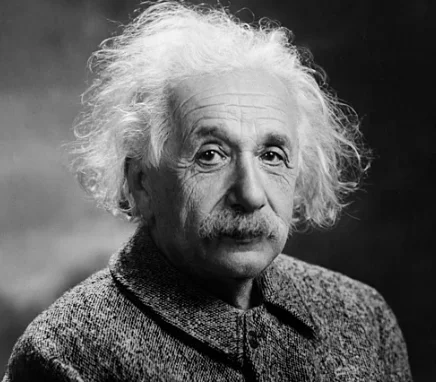

Foundational Physics and Scientific Revolution (1900–1955)
| Field | Detail |
|---|---|
| Born | March 14, 1879 (Died April 18, 1955, Age 76) |
| Nationality | German-born, Swiss, American |
| Education | ETH Zurich (Diploma in Physics & Mathematics) |
| Current Net Worth | N/A |
| Title Portfolio | Theoretical Physicist; Nobel Laureate; Professor |
| Key Status | #PhysicsGenius, #RelativityFounder, #NobelLaureate, #ScientificIcon |
Albert Einstein was born on 14 March 1879 in Ulm, in the Kingdom of Württemberg in the German Empire. He was the first child of Hermann Einstein, an engineer and salesman, and Pauline Koch. In 1880, the family moved to Munich, where Hermann and his brother founded an electrical engineering company. Although the business later struggled financially, it exposed young Einstein to technical and scientific discussions that would influence his intellectual development.
Education in Germany and Switzerland
Einstein attended the Luitpold Gymnasium in Munich. However, he found the rigid educational style restrictive and left Germany in 1894 to join his family in Italy. He later enrolled at the Swiss Federal Polytechnic in Zurich (now ETH Zurich). After initially failing the entrance examination, he passed in 1896 and began studying physics and mathematics. In 1900, Einstein graduated with a diploma in teaching physics and mathematics.
Early Intellectual Curiosity
As a child, Einstein developed a deep fascination with mathematics and natural philosophy. A compass given to him at a young age reportedly sparked his lifelong curiosity about invisible forces and physical laws.
Annus Mirabilis Papers (1905)
The year 1905 is often called the Annus Mirabilis (“miracle year”) of Albert Einstein, during which he published four groundbreaking papers that transformed physics. At the time, Einstein was working as a technical expert at the Swiss Patent Office in Bern, Switzerland. Despite holding no academic position, his work addressed fundamental problems in thermodynamics, electromagnetism, and atomic theory.
Photoelectric Effect#
In his March 1905 paper, Einstein proposed that light consists of discrete energy packets called quanta (later known as photons). He explained how light shining on metal surfaces could eject electrons, resolving experimental results that classical wave theory could not explain. This work provided crucial evidence for quantum theory and later earned Einstein the Nobel Prize in Physics in 1921.
Brownian Motion
Einstein’s second 1905 paper explained the random motion of particles suspended in fluid, known as Brownian motion. He showed that this motion could be mathematically predicted by assuming atoms and molecules existed and moved randomly. The work provided strong evidence for atomic theory, convincing many skeptics that atoms were real physical entities.
Special Relativity
Einstein’s June 1905 paper introduced the theory of special relativity. He proposed that the laws of physics are identical in all inertial frames and that the speed of light is constant regardless of observer motion. From these principles came surprising consequences: Time dilation Length contraction Relativity of simultaneity These ideas revolutionized understanding of space and time.
Mass–Energy Equivalence
Later in 1905, Einstein published a short paper showing that mass and energy are equivalent, expressed in the famous equation: E = mc² This relationship revealed that a small amount of mass can be converted into a large amount of energy. It became fundamental to nuclear physics and later influenced technologies such as nuclear power and weapons.
Scientific Impact
Einstein’s 1905 papers reshaped physics by uniting theoretical insight with experimental evidence. Within a few years, he was recognized internationally as one of the leading physicists of his time.
Academic Career and Rise to Fame#
After the publication of his 1905 papers, Albert Einstein gradually moved from obscurity into academic recognition. Universities began to take interest in his revolutionary ideas, leading to a sequence of professorships that allowed him to expand his work on relativity and gravitation.
Zurich Polytechnic Appointment#
In 1909, Einstein was appointed associate professor at the University of Zurich. This was his first academic position after years at the Swiss Patent Office. At Zurich, Einstein began lecturing on electrodynamics and thermodynamics while refining the ideas that would later form general relativity. His teaching style was informal but intellectually demanding, and students were encouraged to question assumptions.
Prague Professorship#
In 1911, Einstein moved to the Charles University in Prague. During his time there, he deepened his thinking about gravity and the bending of light, predicting that gravity could affect the path of starlight. These early calculations foreshadowed the later confirmation of general relativity.
Return to Zurich#
Einstein returned to Zurich in 1912, this time to teach at the ETH Zurich. There, he collaborated with mathematician Marcel Grossmann, whose expertise in tensor calculus proved essential for developing general relativity. Grossmann introduced Einstein to advanced mathematical tools that allowed him to describe gravity as curvature of spacetime.
Berlin Appointment and World Recognition
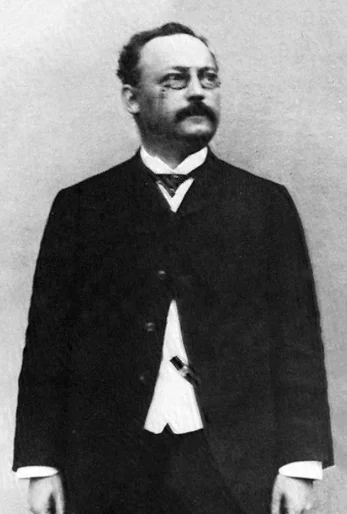
In 1914, Einstein accepted a prestigious position at the Prussian Academy of Sciences in Berlin. This role freed him from teaching duties and allowed full focus on research. By 1915, he completed the general theory of relativity, fundamentally changing the understanding of gravity. In 1919, British astronomer Arthur Eddington confirmed Einstein’s prediction that light bends around massive objects during a solar eclipse. The results were widely publicized, and Einstein became an international celebrity. Newspapers declared that Newton’s theory had been overturned, and Einstein’s name became synonymous with genius.
Growing Fame#
Einstein traveled internationally giving lectures in Europe, the United States, and Asia. His public appearances drew large crowds, and he became both a scientific icon and cultural figure.
General Relativity
One of the greatest achievements of Albert Einstein was the development of the general theory of relativity between 1907 and 1915. This theory replaced Isaac Newton’s concept of gravity as a force with the idea that gravity is the curvature of spacetime caused by mass and energy. General relativity fundamentally reshaped modern cosmology, astrophysics, and gravitational physics.
Principle of Equivalence
Einstein’s path toward general relativity began with the principle of equivalence, first formulated in 1907. He realized that the effects of gravity and acceleration are locally indistinguishable. For example, a person inside a closed elevator cannot tell whether the force they feel comes from gravity or from acceleration. This insight suggested that gravity could be explained through geometry rather than force.
Curved Spacetime
Working with mathematicians such as Marcel Grossmann, Einstein used tensor calculus to describe gravity as curvature of spacetime. Massive objects such as stars and planets bend spacetime, and objects move along curved paths within it. This explained anomalies in Mercury’s orbit that Newtonian physics could not fully account for.
Experimental Confirmation#
The first major test of general relativity came in 1919 when Arthur Eddington observed the bending of starlight during a solar eclipse. The measurements matched Einstein’s predictions, making him famous worldwide. Later confirmations included: Gravitational redshift, Time dilation in strong gravity and Orbital decay of binary pulsars. All supported general relativity’s accuracy.
Black Holes and Cosmology#
Einstein’s equations predicted the existence of black holes—regions where gravity is so strong that nothing can escape. Although Einstein himself doubted their physical reality, later observations confirmed them. General relativity also led to models of an expanding universe, later confirmed by Edwin Hubble’s observations.
Gravitational Waves#
Einstein predicted gravitational waves—ripples in spacetime—in 1916. These waves were directly detected in 2015 by the LIGO Scientific Collaboration. The discovery provided dramatic confirmation of general relativity a century after Einstein proposed it.
Scientific Legacy of General Relativity#
General relativity remains essential for understanding: GPS satellite corrections, Cosmology and Big Bang models, Black holes and neutron stars and Gravitational lensing. It is considered one of the greatest intellectual achievements in human history.
Personal Life and Family#
Beyond his scientific achievements, Albert Einstein led a complex personal life shaped by relationships, intellectual companionship, political conviction, and deep moral reflection. His private life often intersected with his professional development, particularly during his early years.
Marriage to Mileva Marić#
In 1903, Einstein married Mileva Marić, a fellow physics student he met at the Swiss Federal Polytechnic in Zurich. Their intellectual relationship included discussions on physics, mathematics, and philosophy.
In 1903, Einstein married Mileva Marić, a fellow physics student he met at the Swiss Federal Polytechnic in Zurich. Their intellectual relationship included discussions on physics, mathematics, and philosophy. The couple had three children:
- Lieserl (born 1902, fate uncertain)
- Hans Albert Einstein (born 1904)
- Eduard Einstein (born 1910)
The marriage gradually deteriorated due to personal tensions and Einstein’s increasing professional commitments. The couple divorced in 1919.
Marriage to Elsa Einstein
Shortly after his divorce, Einstein married his cousin Elsa Einstein in 1919. Elsa provided domestic stability during Einstein’s years of global fame. She often managed correspondence and protected him from excessive public demands.
Personality and Interests
Einstein was known for his independent thinking and informal demeanor. He frequently avoided formal dress, disliked rigid authority, and valued intellectual freedom. Music played a significant role in his life; he was an accomplished amateur violinist and often turned to music for relaxation and inspiration.
Religious and Philosophical Views
Einstein rejected traditional religious dogma but expressed admiration for what he called the “cosmic religious feeling.” He was influenced by the philosophy of Baruch Spinoza, viewing God as synonymous with the laws of nature rather than a personal deity. His reflections on science and spirituality emphasized humility before the complexity of the universe.
Political Beliefs
Einstein was an outspoken pacifist after World War I. However, with the rise of Nazism in Germany, he supported international efforts to prevent nuclear weapon development by hostile regimes. In 1933, after Adolf Hitler came to power, Einstein emigrated to the United States and renounced his German citizenship.
Later Family Life in America
Einstein settled in Princeton, New Jersey, where he joined the Institute for Advanced Study. His son Hans Albert later became a respected engineer in the United States. Eduard, however, struggled with mental illness and spent much of his life in psychiatric care in Switzerland.
Public Persona
Einstein became one of the most recognizable scientists in history. His distinctive hair and thoughtful expressions became cultural symbols of genius. Despite worldwide admiration, he maintained a modest lifestyle and continued pursuing theoretical physics until his death.
World War II and the Atomic Bomb
During the years surrounding the Second World War, Albert Einstein became indirectly associated with the development of nuclear weapons, despite not working on the atomic bomb itself. His earlier discovery of mass–energy equivalence (E = mc²) had revealed the enormous energy stored within matter, laying theoretical foundations for nuclear physics.
The Einstein–Szilárd Letter
In 1939, Hungarian physicist Leó Szilárd approached Einstein with concerns that Nazi Germany might develop nuclear weapons. Together with other scientists, Szilárd drafted a letter to U.S. President Franklin D. Roosevelt, which Einstein signed. The letter warned that uranium chain reactions could lead to extremely powerful bombs and urged the United States government to take the possibility seriously. This correspondence contributed to the creation of the Advisory Committee on Uranium, an early step toward what became the Manhattan Project.
Relationship to the Manhattan Project
Despite his role in alerting the U.S. government, Einstein was not invited to work on the Manhattan Project. Security officials considered him a political risk due to his pacifist views and past political activism. The Manhattan Project, led scientifically by J. Robert Oppenheimer, ultimately developed and tested the first atomic bomb in 1945.
Reaction to Hiroshima and Nagasaki
Following the bombings of Hiroshima and Nagasaki in August 1945, Einstein expressed regret over the destructive use of nuclear weapons. Although he believed the warning to Roosevelt had been necessary given the threat posed by Nazi Germany, he later advocated strongly for international control of nuclear arms. He remarked that had he known Germany would fail to build an atomic bomb, he would not have signed the 1939 letter.
Postwar Advocacy for Peace
After World War II, Einstein became a leading public voice for nuclear disarmament and global cooperation. He supported the creation of a supranational world government to prevent future wars. In 1955, shortly before his death, Einstein co-signed the Russell–Einstein Manifesto with philosopher Bertrand Russell, calling on world leaders to seek peaceful solutions in the nuclear age. The manifesto later inspired the Pugwash Conferences on Science and World Affairs.
Ethical Reflections
Einstein’s later years were marked by deep reflection on the ethical responsibilities of scientists. He believed scientific knowledge must be guided by moral consideration and humanitarian values.
Later Life and Death
In the final decades of his life, Albert Einstein remained intellectually active while living in Princeton, New Jersey. Although his public fame continued, he increasingly withdrew from political controversy and devoted himself to theoretical research.
Princeton Years
Einstein became a permanent member of the Institute for Advanced Study in 1933 after emigrating from Germany. The Institute allowed him to pursue research without teaching responsibilities. During these years, Einstein worked on attempts to unify gravity and electromagnetism into a single theoretical framework. Although these efforts did not succeed, they anticipated later quests for unified field theories and modern string theory.
Unified Field Theory Efforts
Einstein believed that nature’s forces should be described within one coherent mathematical structure. However, he was skeptical of certain developments in quantum mechanics, especially its probabilistic interpretation. His famous remark, “God does not play dice,” reflected his discomfort with quantum indeterminacy. Despite disagreements with figures such as Niels Bohr, Einstein’s critiques sharpened philosophical debates about the foundations of physics.
Final Years
Einstein remained engaged in public discussions on peace, civil rights, and global governance. He supported civil rights movements in the United States and spoke against racial discrimination. Despite declining health, he continued working daily on scientific problems until shortly before his death.
Death
On 17 April 1955, Einstein suffered internal bleeding caused by a ruptured abdominal aortic aneurysm. He refused surgical intervention, stating that he wished to go when he chose. He died the following day, 18 April 1955, at Princeton Hospital, at the age of 76.
Autopsy and Brain Preservation
During the autopsy, pathologist Thomas Stoltz Harvey removed Einstein’s brain without prior family permission, later claiming it was for scientific study. The brain was preserved and studied for decades in attempts to identify structural differences that might explain Einstein’s intellectual abilities. While some studies reported unusual features, conclusions remain debated among scientists. Einstein was cremated, and his ashes were scattered at an undisclosed location, in accordance with his wishes.
Legacy and Influence
The legacy of Albert Einstein extends far beyond theoretical physics. His contributions transformed modern science, influenced global politics, and reshaped cultural perceptions of intelligence and creativity. Today, Einstein remains one of the most recognized scientific figures in history.
Scientific Impact
Einstein’s theories of special and general relativity fundamentally altered humanity’s understanding of space, time, and gravity. His work laid the groundwork for: Modern cosmology Black hole physics Gravitational lensing GPS satellite corrections Nuclear energy research These applications demonstrate the enduring practical and theoretical importance of his discoveries. His contributions to quantum theory, particularly the explanation of the photoelectric effect, played a crucial role in the development of quantum mechanics.
Cultural Icon
Einstein became a universal symbol of genius and intellectual originality. His image—characterized by unruly hair and thoughtful expression—has appeared in countless books, posters, and educational materials. In 1999, Time magazine named Einstein its “Person of the Century,” recognizing his profound influence on modern thought.
Honors and Memorials
Einstein received numerous awards during his lifetime, most notably the Nobel Prize in Physics in 1921. After his death, many institutions and landmarks were named in his honor, including: The Albert Einstein Memorial in Washington, D.C. The Albert Einstein House in Princeton Numerous schools, research institutes, and scientific awards worldwide The chemical element einsteinium (Es), discovered in 1952, was named in his honor.
Influence on Modern Physics
Einstein’s equations remain central to contemporary astrophysics and cosmology. The detection of gravitational waves in 2015 and imaging of black holes in 2019 provided further confirmation of his theoretical predictions. Modern research in quantum gravity, string theory, and cosmological inflation continues to engage with questions Einstein first posed.
Popular Culture and Representation
Einstein’s life has inspired films, biographies, documentaries, and fictional portrayals. He appears in literature and media as an archetype of the brilliant scientist. His quotes—both authentic and misattributed—circulate widely in public discourse.
Enduring Reputation
Einstein is frequently ranked among the greatest scientists of all time, alongside figures such as Isaac Newton and Galileo Galilei. His intellectual courage, creativity, and humanitarian concerns continue to inspire scientists and thinkers worldwide.
References
- Britannica – Albert Einstein Biography. https://www.britannica.com/biography/Albert-Einstein
- Isaacson, Walter. Einstein: His Life and Universe. https://www.simonandschuster.com/books/Einstein/Walter-Isaacson/9780743264747
- Pais, Abraham. Subtle Is the Lord. Oxford University Press. https://global.oup.com/academic/product/subtle-is-the-lord-9780192806727
- Nobel Prize – Einstein Facts. https://www.nobelprize.org/prizes/physics/1921/einstein/facts/
- Einstein Papers Project – Princeton. https://einsteinpapers.press.princeton.edu/
- Institute for Advanced Study – Einstein. https://www.ias.edu/scholars/einstein
- ETH Zurich – Einstein Student Records. https://ethz.ch/en/the-eth-zurich/portrait/history/albert-einstein.html
- APS History – Einstein Biography. https://www.aps.org/programs/outreach/history/historicsites/einstein.cfm
- NASA – What is Relativity. https://science.nasa.gov/astrophysics/focus-areas/what-is-relativity/
- Einstein (1905) Electrodynamics Paper. https://einsteinpapers.press.princeton.edu/vol2-doc/
- Einstein (1905) Mass–Energy Paper. https://einsteinpapers.press.princeton.edu/vol2-doc/384
- Einstein Annus Mirabilis Overview – Caltech. https://einstein.caltech.edu/article/annus-mirabilis
- Swiss Patent Office – Einstein History. https://www.bern.com/en/detail/albert-einstein-patent-office
- Einstein Biography – History.com. https://www.history.com/topics/inventions/albert-einstein
- Einstein Photoelectric Paper. https://einsteinpapers.press.princeton.edu/vol2-doc/343
- Millikan Nobel Lecture. https://www.nobelprize.org/prizes/physics/1923/millikan/lecture/
- Einstein Nobel Lecture. https://www.nobelprize.org/prizes/physics/1921/einstein/lecture/
- Einstein Brownian Motion Paper. https://einsteinpapers.press.princeton.edu/vol2-doc/350
- Jean Perrin Nobel Facts. https://www.nobelprize.org/prizes/physics/1926/perrin/facts/
- Stanford Encyclopedia – Spacetime Theories. https://plato.stanford.edu/entries/spacetime-theories/
- MIT OpenCourseWare Relativity. https://ocw.mit.edu/
- Britannica – Mass Energy Equivalence. https://www.britannica.com/science/mass-energy-equivalence
- IAEA – History of Nuclear Energy. https://www.iaea.org/newscenter/news/history-of-nuclear-energy
- NIST – Relativity and GPS. https://www.nist.gov/
- Royal Society – 1919 Eclipse. https://royalsociety.org/blog/2019/05/einstein-eclipse/
- BBC Science – Einstein Relativity Confirmation. https://www.bbc.com/news/science-environment-23454782
- Stanford Encyclopedia – General Relativity. https://plato.stanford.edu/entries/general-relativity/
- LIGO Scientific Collaboration. https://www.ligo.caltech.edu/
- Event Horizon Telescope – Black Hole Imaging. https://eventhorizontelescope.org/
- PBS NOVA Einstein Documentary. https://www.pbs.org/wgbh/nova/einstein/
- Einstein Archives Online – Hebrew University of Jerusalem. https://www.alberteinstein.info/
- Caltech Einstein Papers Project. https://einstein.caltech.edu/
- Princeton University Library – Einstein Papers. https://library.princeton.edu/special-collections/collections/albert-einstein-papers
- National Archives – Einstein–Szilard Letter. https://www.archives.gov/milestone-documents/einstein-szilard-letter
- Atomic Heritage Foundation – Einstein and the Bomb. https://www.atomicheritage.org/history/einstein-letter-roosevelt
- FBI Vault – Albert Einstein File. https://vault.fbi.gov/albert-einstein
- Jewish Virtual Library – Albert Einstein. https://www.jewishvirtuallibrary.org/albert-einstein
- NAACP Archives – Einstein Civil Rights Advocacy. https://naacp.org/
- Smithsonian Magazine – Einstein in Popular Culture. https://www.smithsonianmag.com/innovation/einstein-pop-culture-180968070/
- Time Magazine – Person of the Century. https://content.time.com/time/magazine/article/0,9171,993017,00.html
- Institute for Advanced Study – Einstein Scholar Page. https://www.ias.edu/scholars/einstein
- Historical Society of Princeton – Einstein in Princeton. https://princetonhistory.org/einstein/
- Albert Einstein Memorial – Architect of the Capitol. https://www.aoc.gov/explore-capitol-campus/art/albert-einstein-memorial
- Einstein House – Bern Tourism. https://www.bern.com/en/detail/einstein-house
- Einstein Museum Bern. https://www.einstein-bern.ch/
- Einstein Birthplace – Ulm Tourism. https://tourismus.ulm.de/en/discover/einstein
- Einstein Tower – Potsdam Observatory. https://www.aip.de/en/research/facilities/einstein-tower
- Albert Einstein Society – Einstein Medal. https://www.einstein-gesellschaft.ch/en/einstein-medal/
- Albert Einstein College of Medicine. https://www.einsteinmed.edu/
- Archive.org – Einstein Books Collection. https://archive.org/search.php?query=Albert%20Einstein
- Project Gutenberg – Einstein Relativity Book. https://www.gutenberg.org/ebooks/5001
- Princeton University Press – Einstein Publications. https://press.princeton.edu/search?query=Einstein
- Stanford Encyclopedia – Einstein Entry. https://plato.stanford.edu/entries/einstein/
- HyperPhysics – Relativity Overview. http://hyperphysics.phy-astr.gsu.edu/hbase/Relativ/relcon.html
- ESA – Gravitational Lensing. https://www.esa.int/Science_Exploration/Space_Science/Gravitational_lensing
- NASA – Mercury Orbit and Relativity. https://solarsystem.nasa.gov/news/1092/mercurys-orbit-and-einstein/
- GPS.gov – Relativity Corrections. https://www.gps.gov/systems/gps/modernization/
- Nature – Einstein Brain Studies Review. https://www.nature.com/
- Princeton Hospital – Einstein Death Records. https://www.princetonhcs.org/
- American Institute of Physics – Einstein Oral Histories. https://www.aip.org/history-programs/niels-bohr-library/oral-histories
- WorldCat – Einstein Bibliography. https://www.worldcat.org/identities/lccn-n79-13871/
- Google Scholar – Einstein Papers. https://scholar.google.com/scholar?q=Albert+Einstein
- UNESCO – Einstein and Education. https://en.unesco.org/
- IMDb – Film Portrayals of Einstein. https://www.imdb.com/name/nm0256818/
- PhysicsWorld – Einstein Articles. https://physicsworld.com/tag/albert-einstein/
- Norton, John. Einstein’s Path to General Relativity. https://philsci-archive.pitt.edu/
- Pais, Abraham. Einstein Before Israel. Princeton University Press. https://press.princeton.edu/books/paperback/9780691025202
- Hebrew University of Jerusalem – Einstein Estate. https://new.huji.ac.il/en/einstein
- Einstein in Princeton – Historical Society of Princeton. https://princetonhistory.org/einstein/
- PBS NOVA – Einstein’s Big Idea Documentary. https://www.pbs.org/wgbh/nova/einstein/
- BBC Documentary – Genius of Einstein. https://www.bbc.co.uk/programmes/b00w3z8y
- History of Quantum Mechanics – APS. https://www.aps.org/publications/apsnews/200501/history.cfm
- Photoelectric Effect History – HyperPhysics. http://hyperphysics.phy-astr.gsu.edu/hbase/mod1.html
- Einstein and Bose Statistics – APS. https://journals.aps.org/pr/abstract/10.1103/PhysRev.28.178
- Satyendra Nath Bose Biography – Britannica. https://www.britannica.com/biography/Satyendra-Nath-Bose
- Cosmological Constant History – NASA. https://map.gsfc.nasa.gov/universe/uni_accel.html
- Dark Energy Research – NASA. https://science.nasa.gov/astrophysics/focus-areas/what-is-dark-energy/
- Gravitational Lensing Explanation – ESA. https://www.esa.int/Science_Exploration/Space_Science/Gravitational_lensing
- Mercury Orbit and Relativity – NASA. https://solarsystem.nasa.gov/news/1092/mercurys-orbit-and-einstein/
- Time Dilation Experiments – NIST. https://www.nist.gov/pml/time-and-frequency-division/time-dilation
- Einstein Medal – Albert Einstein Society. https://www.einstein-gesellschaft.ch/en/einstein-medal/
- Albert Einstein Award – Lewis & Clark College. https://college.lclark.edu/einstein_award/
- Albert Einstein College of Medicine. https://www.einsteinmed.edu/
- Albert Einstein Memorial – Washington DC. https://www.aoc.gov/explore-capitol-campus/art/albert-einstein-memorial
- Einstein Tower – Potsdam Observatory. https://www.aip.de/en/research/facilities/einstein-tower
- Einstein Museum Bern. https://www.einstein-bern.ch/
- Einstein House – Bern Tourism. https://www.bern.com/en/detail/einstein-house
- Einstein Birthplace – Ulm Tourism. https://tourismus.ulm.de/en/discover/einstein
- Einstein Family History – Jewish Virtual Library. https://www.jewishvirtuallibrary.org/albert-einstein
- Einstein Pacifism – Stanford Encyclopedia. https://plato.stanford.edu/entries/einstein/
- Einstein Zionism Speeches – Jewish Agency Archives. https://www.jewishagency.org/einstein/
- Einstein and Gandhi Correspondence. https://www.gandhiheritageportal.org/
- Einstein Interview Archives – American Institute of Physics. https://www.aip.org/history-programs/niels-bohr-library/oral-histories
- Einstein Popular Culture References – Smithsonian Magazine. https://www.smithsonianmag.com/innovation/einstein-pop-culture-180968070/
- Einstein and Education Reform – UNESCO Archives. https://en.unesco.org/
- Einstein Papers Chronology – Princeton University. https://einsteinpapers.press.princeton.edu/chronology/
- Pais, Abraham (1982). Subtle is the Lord: The Science and the Life of Albert Einstein. Oxford University Press. https://global.oup.com/academic/product/subtle-is-the-lord-9780192806727
- Isaacson, Walter (2007). Einstein: His Life and Universe. Simon & Schuster. https://www.simonandschuster.com/books/Einstein/Walter-Isaacson/9780743264747
- Calaprice, Alice (2010). The Ultimate Quotable Einstein. Princeton University Press. https://press.princeton.edu/books/hardcover/9780691138176/the-ultimate-quotable-einstein
- Fölsing, Albrecht (1997). Albert Einstein: A Biography. Viking. https://www.penguinrandomhouse.com/books/295124/albert-einstein-by-albrecht-folsing/
- The Nobel Prize Foundation. “Albert Einstein – Nobel Lecture.” https://www.nobelprize.org/prizes/physics/1921/einstein/lecture/
- The Nobel Prize Foundation. “Albert Einstein – Facts.” https://www.nobelprize.org/prizes/physics/1921/einstein/facts/
- Stanford Encyclopedia of Philosophy. “Albert Einstein.” https://plato.stanford.edu/entries/einstein/
- Encyclopaedia Britannica. “Albert Einstein.” https://www.britannica.com/biography/Albert-Einstein
- PBS. “Einstein – NOVA Documentary.” https://www.pbs.org/wgbh/nova/einstein/
- American Institute of Physics. “Einstein Papers Project.” https://einsteinpapers.press.princeton.edu/
- Princeton University Press. “The Collected Papers of Albert Einstein.” https://press.princeton.edu/series/the-collected-papers-of-albert-einstein
- NASA. “Einstein’s Theory of Relativity.” https://science.nasa.gov/astrophysics/focus-areas/what-is-relativity
- National Geographic. “Albert Einstein Biography.” https://www.nationalgeographic.com/history/article/albert-einstein
- Einstein Archives Online. Hebrew University of Jerusalem. https://www.alberteinstein.info/
- Smithsonian Magazine. “Einstein and the Atomic Bomb.” https://www.smithsonianmag.com/history/einstein-and-the-bomb-57531508/
- History.com Editors. “Albert Einstein.” https://www.history.com/topics/inventions/albert-einstein
- BBC History. “Albert Einstein.” https://www.bbc.co.uk/history/historic_figures/einstein_albert.shtml
- Max Planck Society. “Einstein and Relativity.” https://www.mpg.de/einstein
- CERN. “Relativity Explained.” https://home.cern/science/physics/relativity
- MIT OpenCourseWare. “Special Relativity.” https://ocw.mit.edu/courses/8-20-introduction-to-special-relativity-january-iap-2005/
- Harvard Gazette. “Einstein’s Legacy.” https://news.harvard.edu/gazette/story/2005/04/einsteins-legacy/
- American Physical Society. “Einstein’s Annus Mirabilis.” https://www.aps.org/publications/apsnews/200503/history.cfm
- Caltech. “General Relativity Overview.” https://www.caltech.edu/about/news/general-relativity
- Princeton University. “Institute for Advanced Study – Einstein.” https://www.ias.edu/scholars/einstein
- Jewish Virtual Library. “Albert Einstein.” https://www.jewishvirtuallibrary.org/albert-einstein
- United States Holocaust Memorial Museum. “Einstein and Nazi Germany.” https://encyclopedia.ushmm.org/content/en/article/albert-einstein
- PBS. “Einstein’s Brain.” https://www.pbs.org/wgbh/nova/einstein/brain/
- New York Times Archive. “Einstein Dies at 76.” https://www.nytimes.com/1955/04/19/archives/dr-einstein-dies-in-sleep-at-76.html
- Library of Congress. “Albert Einstein Papers.” https://www.loc.gov/collections/albert-einstein-papers/
- National Archives. “Einstein Letter to Roosevelt.” https://www.archives.gov/milestone-documents/einstein-letter
- American Museum of Natural History. “Einstein Exhibition.” https://www.amnh.org/exhibitions/einstein
- University of Bern. “Einstein at the Patent Office.” https://www.unibe.ch/university/history/albert_einstein/index_eng.html
- ETH Zürich Archives. “Einstein Student Records.” https://ethz.ch/en/the-eth-zurich/portrait/history/albert-einstein.html
- Nobel Prize Museum. “Einstein’s Nobel Medal.” https://www.nobelprizemuseum.se/en/einstein
- APS Physics. “Photoelectric Effect Explained.” https://www.aps.org/publications/apsnews/200512/history.cfm
- NASA. “Gravitational Waves and Relativity.” https://www.nasa.gov/feature/goddard/2016/nasa-confirms-einstein-s-general-relativity
- LIGO Scientific Collaboration. “Einstein’s Prediction Confirmed.” https://www.ligo.caltech.edu/page/what-are-gw
- World Science Festival. “Einstein’s Theories Explained.” https://www.worldsciencefestival.com/topics/einstein/
- National Academy of Sciences. “Einstein Biography.” https://www.nasonline.org/member-directory/deceased-members/46291.html
- American Philosophical Society. “Einstein Membership.” https://search.amphilsoc.org/memhist/search?creator=Einstein
- TIME Magazine. “Person of the Century: Albert Einstein.” https://content.time.com/time/specials/packages/article/0,28804,2019712_2019708_2019715,00.html
- Scientific American. “Einstein’s Impact on Modern Physics.” https://www.scientificamerican.com/article/einsteins-impact-on-modern-physics/
- Physics World. “Einstein’s Greatest Achievements.” https://physicsworld.com/a/einsteins-greatest-achievements/
- Space.com. “Relativity and Space-Time.” https://www.space.com/17661-theory-general-relativity.html
- Britannica. “Photoelectric Effect.” https://www.britannica.com/science/photoelectric-effect
- Stanford Encyclopedia of Philosophy. “Philosophy of Einstein.” https://plato.stanford.edu/entries/einstein-philscience/
- Oxford Reference. “Einstein.” https://www.oxfordreference.com/display/10.1093/oi/authority.20110803095702734
- Biography.com Editors. “Albert Einstein Biography.” https://www.biography.com/scientist/albert-einstein
- BBC Documentary. “Einstein and the Bomb.” https://www.bbc.co.uk/programmes/b00n4qtp
- Smithsonian Institution Archives. “Einstein Records.” https://siarchives.si.edu/history/albert-einstein
- Einstein Birthplace Museum. Ulm, Germany. https://einsteinhaus-ulm.de/
-
Einstein Museum Bern.
Welcome to the Einstein House
- Hebrew University of Jerusalem. “Einstein Estate.” https://new.huji.ac.il/en/albert-einstein
- United Nations. “Einstein on Peace.” https://www.un.org/en/academic-impact/albert-einstein
- Einstein Forum. Potsdam. https://www.einsteinforum.de/
- WorldCat. “Works by Albert Einstein.” https://www.worldcat.org/identities/lccn-n79018107/












Community involvement is essential for successful conservation. Local people, who often depend on forests for their livelihoods, play a significant role in managing these resources sustainably. Education and awareness programs help foster a sense of ownership, ensuring that forests are protected and preserved for future generations.
Engaging local communities is vital for successful conservation efforts. Since many depend on forests for their livelihoods, they are key players in sustainable resource management. Raising awareness and providing education empower these communities, fostering a shared commitment to protect forests for the future.
This was an intriguing article! I appreciate how it captures the essence of modern intellectuals and their diverse thoughts. The analysis was insightful and made me reflect on how these thinkers influence our current world. It’s not often that we get such a deep dive into the minds of today’s intellectuals.
Thank you for your thoughtful feedback! I’m glad to hear that the article resonated with you and sparked reflection. Exploring the ideas of modern intellectuals is always fascinating, especially when considering their impact on our world today.
Thank you for your kind words! I’m glad the article resonated with you. It’s always fascinating to explore the thoughts of modern intellectuals and their influence on our world. I appreciate you taking the time to reflect on these ideas. If there are specific topics or thinkers you’d like to see more of, feel free to share!
I’m so glad you found the article intriguing! The diverse perspectives of modern intellectuals truly shape how we see the world, and it’s rewarding to explore their impact in depth. It’s always inspiring to hear how others interpret these complex ideas. If you have any specific thinkers or topics you\’d like to dive deeper into, I’d love to hear your suggestions!